
 Login
LoginReading view
Delavnica: Uporabljajmo superračunalnike!
Opis: Delavnica je namenjena raziskovalcem, inženirjem, študentom in drugim, ki ste spoznali, da potrebujete več računskih virov, kot vam jih ponujajo običajni računalniki. Delavnica bo potekala v okviru konference IEEE ERK 2026.
Na delavnici se bomo seznanili s slovensko superračunalniško infrastrukturo in možnostmi dostopa do nje. V okviru delavnice bomo delali na eni od superračunalniških gruč - povezali se bomo na prijavno vozlišče, prenašali datoteke na in iz superračunalnika ter zaganjali naloge in spremljali njihvo izvajanje preko vmesne programske opreme Slurm.
Delavnica je brezplačna. Na delavnico pridite s svojim prenosnim računalnikom, mi vam bom priskrbeli poverilnice na superračunalniški gruči.
Jezik: Slovenski
Zahtevnost: Osnovna
Omejitev števila udeležencev: 15
Termin: 25. 9. 2026 9:00-12:00
Lokacija-fizična: Hotel Bernardin, Portorož, Soba E
Priporočeno predznanje: /
Ciljna publika: raziskovalci, inženirji, študenti, vsi ki potrebujejo več računskih virov pri svojem delu
Na izobraževanju pridobljena znanja:
- Razumevanje delovanja in zgradbe superračunalnikov
- Uporaba vmesne programske opreme SLURM
- Osnovna uporaba programskih okolij in vsebnikov
- Upravljanje z datotekami in poganjanje nalog
- Osnovna obdelava videoposnetkov
Organizatorja:
- Konferenca IEEE ERK 2026 in

Predavatelji:
| Ime: | Davor Sluga |
| Opis: | https://fri.uni-lj.si/sl/o-fakulteti/osebje/davor-sluga |
| E-mail: | davor.sluga@fri.uni-lj.si |
| Ime: | Ratko Pilipović |
| Opis: | https://www.fri.uni-lj.si/sl/o-fakulteti/osebje/ratko-pilipovic |
| E-mail: | ratko.pilipovic@fri.uni-lj.si |
 Projekt EuroCC 3 je prejel sredstva Skupnega podjetja za evropsko visokozmogljivo računalništvo (EuroHPC JU) na podlagi Sporazuma o dodelitvi sredstev št. 101306701. Skupno podjetje EuroHPC prejema podporo programa Evropske unije Digitalna Evropa ter naslednjih držav: Nemčije, Albanije, Avstrije, Belgije, Bosne in Hercegovine, Bolgarije, Hrvaške, Cipra, Češke, Danske, Estonije, Finske, Francije, Grčije, Madžarske, Islandije, Irske, Italije, Latvije, Litve, Luksemburga, Malte, Črne gore, Nizozemske, Severne Makedonije, Norveške, Poljske, Portugalske, Romunije, Srbije, Slovaške, Slovenije, Španije, Švedske, Turčije in Kosova.
Financira Evropska unija. Izražena stališča in mnenja so izključno stališča avtorjev ter ne odražajo nujno stališč Evropske unije ali Skupnega podjetja EuroHPC. Zanje ne moreta biti odgovorna niti Evropska unija niti Skupno podjetje EuroHPC.
Nacionalni kompetenčni center SLING sofinancira Ministrstvo za izobraževanje, znanost in mladino Republike Slovenije.
HPC in Europe je krovna znamka, ki združuje evropske pobude na področju visokozmogljivega računalništva v več kot 36 državah.
Kontejnerizacija in orkestracija aplikacij | Containerization and orchestration of applications
Izvajalec / Course provider: University of Ljubljana, Faculty of Computer and Information Science (UL FRI)
Predavatelji / Instructors: Matjaž Pančur (UL FRI), Uroš Lotrič (UL FRI), Davor Sluga (UL FRI)
Learning objectives: The course is intended for those who want to learn in detail how containers work, how an application is automatically containerized, and how it is deployed using zero downtime deployment patterns.
Course content: The course content covers the areas of virtualization, containerization, and web application orchestration. The technical fundamentals of containers and container machines, CI/CD pipelines, and orchestration of the entire application stack are covered in detail. Through practical examples, it will be explained how to containerize a web application, automate image building using a CI/CD pipeline, and deploy the application to a single server with Docker Compose and to a cluster of servers using the Kubernetes platform.
Learning outcomes: After completing the course, participants will:
- understand how containers are built and the role different container runtimes play in running them across various systems,
- be able to deploy an application stack using Docker Compose,
- understand how the Kubernetes container orchestrator works,
- be able to deploy an application stack to Kubernetes.
Language: Slovenian, English
Prerequisites: /
Target audience: students; researchers; industry; public sector
Workshop:Secure HPC workloads for SMEs
Description: HPC environments are shared, multi-tenant systems where hundreds of users run jobs side by side on the same physical infrastructure. This creates a unique security landscape: the cluster administrators must isolate users from each other and from the underlying system, while users themselves are responsible for protecting their data, credentials, and workloads as they move through the pipeline. This workshop walks through HPC security end to end: what the infrastructure team does to keep the cluster safe, what you as a user can (and should) do to protect your own work, and how to secure the containers you bring onto the system.
Scope and Topics:
Part 1 - Infrastructure Security (13:00 - 13:30)
How the HPC platform itself is hardened, largely invisible to the end user but foundational to everything else: process and resource isolation, storage isolation, network security, IAM, auditing, scheduler-level security, etc.
Part 2 — What You Can Do as a User (13:40 - 14:10)
Best practices, Slurm and system features users control to protect their own jobs and data, such as exclusive mode, secure data transfers and data management, encryption, revoking sessions and keys, cleaning the data from the compute node, etc.
Part 3 - Container Security (14:20 - 14:50)
Because containers are the primary way users package and run software on HPC, they deserve their own layer of scrutiny: image signing, signature verification, vulnerability scanning, SBOMs, dealing with sensitive data, registries and other security controls.
Difficulty: Beginner - Intermediate
Language: English
Date and time: 08. 10. 2026 at 13.00
Max. number of participants: 30
Virtual location: ZOOM
Prerequisite knowledge: Having a basic knowledge of Linux is expected. Users should already have basic understanding of HPC systems.
Target audience: Industry, Academia, Public sector
After the workshop, participants will understand:
• The shared responsibility model between HPC infrastructure teams and end users when it comes to security.
• The mechanisms HPC centres use to isolate users, jobs, and data from one another at the OS, network, and scheduler level.
• The practical steps users should take to protect their own data and workloads while working on a shared system.
• How to secure the full lifecycle of a container, from build to signing, to scanning, to runtime, before and while using it on HPC.
Organiser:

Lecturers:
| Ime: | Barbara Krašovec |
| Opis: | Barbara Krašovec is an HPC systems architect at the Jožef Stefan Institute in Slovenia. She has over 15 years’ experience in HPC, cloud and distributed systems, virtualisation, and cybersecurity. She is a member of SLING, Slovenia’s national supercomputing network, EuroHPC Vega design and administration teams. She also serves on the EGI CSIRT and the EOSC EU Node security team, where she supports the security of European research infrastructure. Her work spans architecture, deployment, and operations of advanced computing environments, with a strong focus on secure, scalable solutions for scientific and industrial applications. |
| E-mail: | info@sling.si |
| Ime: | Dejan Lesjak |
| Opis: | Systems architect at Jozef Stefan Institute. |
| E-naslov: | info@sling.si |

Projekt EuroCC 3 je prejel sredstva Skupnega podjetja za evropsko visokozmogljivo računalništvo (EuroHPC JU) na podlagi Sporazuma o dodelitvi sredstev št. 101306701. Skupno podjetje EuroHPC prejema podporo programa Evropske unije Digitalna Evropa ter naslednjih držav: Nemčije, Albanije, Avstrije, Belgije, Bosne in Hercegovine, Bolgarije, Hrvaške, Cipra, Češke, Danske, Estonije, Finske, Francije, Grčije, Madžarske, Islandije, Irske, Italije, Latvije, Litve, Luksemburga, Malte, Črne gore, Nizozemske, Severne Makedonije, Norveške, Poljske, Portugalske, Romunije, Srbije, Slovaške, Slovenije, Španije, Švedske, Turčije in Kosova.
Financira Evropska unija. Izražena stališča in mnenja so izključno stališča avtorjev ter ne odražajo nujno stališč Evropske unije ali Skupnega podjetja EuroHPC. Zanje ne moreta biti odgovorna niti Evropska unija niti Skupno podjetje EuroHPC.
Nacionalni kompetenčni center SLING sofinancira Ministrstvo za izobraževanje, znanost in mladino Republike Slovenije.
HPC in Europe je krovna znamka, ki združuje evropske pobude na področju visokozmogljivega računalništva v več kot 36 državah.
Poravnava in prilagajanje velikih jezikovnih modelov po meri uporabnika | Alignment and adaptation of large language models to user needs
Izvajalec / Course provider: Jožef Stefan Institute (JSI)
Predavatelji / Instructors: Matej Martinc (JSI), Boshko Koloski (JSI)
Learning objectives: Gain practical knowledge of Large Language Model (LLM) alignment using reinforcement learning methods to ensure safety, reduce bias, and follow complex user instructions.
Course content:
For the successful implementation of LLMs in business and scientific environments, models require more than just knowledge; they need alignment with ethical standards and specific user preferences. This practical workshop will cover:
- Fundamentals of Alignment: Why simple next-token prediction is not enough and how to guide models toward helpfulness, honesty, and harmlessness.
- Reinforcement Learning from Human Feedback (RLHF): An overview of algorithms (e.g., PPO, DPO, GRPO) for fine-tuning models (such as Gemma and GaMS).
- Debiasing: Techniques for identifying and reducing stereotypes and biases in generated responses.
- Adaptation to user needs: How to use the alignment process to ensure a model adheres to the specific tone, style, or professional constraints of a particular organization.
Learning outcomes:
- Understanding the process of model alignment using reinforcement learning.
- The ability to implement techniques to reduce bias in model responses.
- Practical knowledge of adapting model behavior to the specific requirements of a client or research project.
AI-Powered Enterprise – transformacija poslovnih procesov z generativno in analitično umetno inteligenco | AI-Powered enterprise – Transforming business processes with generative and analytical AI
Izvajalec / Course provider: Technology park Ljubljana (TP LJ)
Predavatelji / Instructors:
dr. Domen Mongus, UM, FERI, GeMMa Lab
Borut Terpinc, vodja UI razvoja, Kalmia AI
Klemen Rizman, UI direktor, CREAPLUS
Maj Mis, soustanovitelj in direktor AlpDev
Vabimo podjetja, ki želijo umetno inteligenco vključiti v poslovanje sistematično, merljivo in dolgoročno. Na izobraževanju bomo podjetja vodili pri identificiranju primerov kdaj potrebujejo za poslovanje, razvoj, testiranje ali skaliranje rešitev tehnologijo umetne inteligence in naprednejšo računsko infrastrukturo kot so HPC. Pokazali bomo kako se na to pripraviti in kakšne imajo podjetja priložnosti v okviru projekta SLAIF.
Dogodek je namenjen podjetjem, startupom in razvojnim ekipam, ki želijo umetno inteligenco sistematično uvajati v poslovne procese ter v razvoj AI produktov in storitev. Poseben poudarek bo na pripravi podjetja na AI/HPC projekt: na opredelitvi poslovnega izziva, preverjanju kakovosti podatkov, izbiri primernega primera uporabe, oceni potrebnih virov ter načrtovanju poti od PoC do produkcijske rešitve.
Udeleženci bodo po dogodku bolje razumeli:
-
kateri poslovni problemi so primerni za uporabo AI,
-
kdaj AI rešitev potrebuje HPC infrastrukturo,
-
kako oceniti pripravljenost podjetja na AI/HPC projekt,
-
kako pripraviti podatke, procese in ekipo za prvi PoC,
-
kako izbrati primer uporabe z največjim poslovnim učinkom,
-
kako oceniti potrebne tehnične, podatkovne in organizacijske vire,
-
kako načrtovati prehod od PoC do produkcijske rešitve,
-
kako povezati AI/HPC projekt s KPI-ji, ROI in dolgoročnimi cilji podjetja.
Po izobraževanju vabljeni, da se nam pridružite tudi na neformalnem Druženju ob ribniku. Prijave se zbirajo na tej povezavi.
We invite companies that want to integrate artificial intelligence into their business in a systematic, measurable and long-term way. In this educational event, we will guide companies in identifying when they need AI technologies and advanced computing infrastructure, such as HPC, for business operations, development, testing or scaling of solutions. We will show how to prepare the company for this advancement and what opportunities are available to companies within the SLAIF project.
The event is intended for companies, startups and development teams that want to introduce artificial intelligence systematically into business processes and into the development of AI products and services. Special emphasis will be placed on preparing a company for an AI/HPC project: defining the business challenge, assessing data quality, selecting the right use case, estimating the required resources, and planning the path from PoC to a production-ready solution.
After the event, participants will better understand:
-
which business problems are suitable for AI,
-
when an AI solution requires HPC infrastructure,
-
how to assess a company’s readiness for an AI/HPC project,
-
how to prepare data, processes and the team for the first PoC,
-
how to select the use case with the highest business impact,
-
how to estimate the required technical, data and organisational resources,
-
how to plan the transition from PoC to a production-ready solution,
-
how to connect an AI/HPC project with KPIs, ROI and the company’s long-term goals.
After the event, you are also warmly invited to join us for an informal "Networking by the Pond". Registrations are collected via this link.
Ai act, DGA in upravljanje umetne inteligence – od strategije do skladnosti z EU AI Act
Izvajalec / Course provider: Technology park Ljubljana (TP LJ)
Predavatelji / Instructors:
Maja Škrjanc, Odsek za umetno inteligenco, Institut »Jožef Stefan« — raziskovalka in vodja projektov z dolgoletnimi izkušnjami pri uvajanju rešitev umetne inteligence v industrijo. Ukvarja se tudi z upravljanjem sistemov umetne inteligence ter etičnimi in regulatornimi vidiki njihove uporabe.
Mag. Aleš Veršič, Ministrstvo za zdravje, Direktorat za digitalizacijo v zdravstvu — strokovnjak, ki je na Ministrstvu za digitalno preobrazbo vodil nacionalno implementacijo DGA.
Maja Škrjanc bo predstavila aktualne spremembe AI Acta, njihov vpliv na razvoj in uporabo sistemov umetne inteligence ter pomen kakovosti, izvora in sledljivosti podatkov za zagotavljanje skladnosti. Posebno pozornost bo namenila razliki, ki v praksi najpogosteje manjka: klasično strojno učenje in generativna umetna inteligenca sprožata povsem različne obveznosti in različna tveganja. Pogledali bomo, kje umetno inteligenco v malih in srednjih podjetjih dejansko že srečujemo, kako deluje pristop AI Acta po ravneh tveganja, kdaj podjetje nepričakovano zdrsne v kategorijo visokega tveganja ter kaj so štiri stvari, ki jih mora imeti urejene vsako podjetje.
Mag. Aleš Veršič bo DGA umestil v evropsko podatkovno strategijo in pojasnil njegove povezave z AI Actom. Predstavil bo ponovno uporabo zaščitenih podatkov javnega sektorja, storitve posredovanja podatkov, podatkovni altruizem ter zahteve glede zaupanja, preglednosti in odgovornega upravljanja podatkov.
Poseben poudarek bo na slovenski implementaciji DGA, izvedbenem zakonu ZIUEUP, pristojnih organih ter konkretnih obveznostih in najpogostejših pravnih dilemah podjetij. Predstavljeni bodo tudi praktični primeri ter možnosti razvoja podatkovnih storitev in vključevanja v evropske podatkovne prostore.
Udeleženci bodo po dogodku bolje razumeli:
-
katera evropska pravila se dotikajo njihovega podjetja in katera ne,
-
kako se obveznosti razlikujejo pri klasičnem strojnem učenju in pri generativni umetni inteligenci,
-
kako razvrstiti lastne sisteme umetne inteligence po ravneh tveganja iz AI Acta,
-
kdaj je podjetje ponudnik in kdaj zgolj uvajalec sistema umetne inteligence,
-
zakaj sta kakovost in izvor podatkov pogoj za skladnost, ne le za dobre rezultate,
-
kaj DGA prinaša glede ponovne uporabe podatkov javnega sektorja, posredovanja podatkov in podatkovnega altruizma,
-
kakšne obveznosti prinaša slovenski izvedbeni zakon ZIUEUP in kdo so pristojni organi,
-
kako se podjetje lahko vključi v evropske podatkovne prostore in razvija lastne podatkovne storitve.
Dogodek je namenjen direktorjem in vodjem podjetij, vodjem digitalizacije, podatkovnim in AI strokovnjakom, startupom, raziskovalnim organizacijam, javnim institucijam, pravnikom ter pooblaščenim osebam za varstvo podatkov (DPO).
Predznanje ni potrebno – vsebina je zasnovana razumljivo in praktično tudi za nepravnike.
Prijavite se na izobraževanje in preverite, kaj mora vaše podjetje urediti že danes.
Instructors:
Maja Škrjanc, Department of Artificial Intelligence, Jožef Stefan Institute — researcher and project manager with many years of experience introducing artificial intelligence solutions into industry. She also works on the governance of AI systems and on the ethical and regulatory aspects of their use.
Aleš Veršič, MSc, Ministry of Health, Directorate for Digitalisation in Healthcare — an expert who led the national implementation of the DGA at the Ministry of Digital Transformation.
Maja Škrjanc will present the latest changes to the AI Act, their impact on the development and use of AI systems, and the importance of data quality, provenance and traceability for ensuring compliance. She will pay particular attention to a distinction that is most often missing in practice: classical machine learning and generative artificial intelligence trigger entirely different obligations and entirely different risks. We will look at where AI is already being used in small and medium-sized enterprises, how the AI Act's risk-based approach works, when a company unexpectedly slips into the high-risk category, and what the four things are that every company now needs to have in order.
Aleš Veršič, MSc, will place the DGA within the European data strategy and explain its links to the AI Act. He will cover the re-use of protected public sector data, data intermediation services, data altruism, and the requirements regarding trust, transparency and responsible data governance.
Particular emphasis will be placed on the Slovenian implementation of the DGA, the national implementing act (ZIUEUP), the competent authorities, and the concrete obligations and most common legal dilemmas companies face. Practical examples will also be presented, along with opportunities to develop data services and to join European data spaces.
After the event, participants will better understand:
- which European rules apply to their company and which do not,
- how obligations differ between classical machine learning and generative artificial intelligence,
- how to classify their own AI systems according to the AI Act's risk levels,
- when a company is a provider and when merely a deployer of an AI system,
- why data quality and provenance are a precondition for compliance, not just for good results,
- what the DGA brings in terms of re-use of public sector data, data intermediation and data altruism,
- what obligations the Slovenian implementing act (ZIUEUP) introduces and who the competent authorities are,
- how a company can join European data spaces and develop its own data services.
The event is intended for company directors and managers, heads of digitalisation, data and AI specialists, startups, research organisations, public institutions, lawyers, and Data Protection Officers (DPOs).
No prior knowledge is required – the content is designed to be clear and practical, including for non-lawyers.
Register for the training and find out what your company needs to put in place today.
Please note: the training will be delivered in Slovenian.
Orchestrated Agentic Experimentation
Course provider: Faculty of Electrical Engineering, University of Ljubljana
Instructors: Assoc. Prof. Dr. Janez Perš, Dr. Jon Muhovič
Learning objectives: Participants will learn the principles of Orchestrated Agentic Experimentation: a disciplined, human-governed workflow in which a scientist or researcher uses a strategic AI model and an autonomous execution agent to move from a research question toward a reproducible experimental setup and preliminary evidence.
Content: The full-day workshop, Orchestrated Agentic Experimentation, will run from 8:30 to 16:00, with a coffee break and lunch in between. Participants will learn how to transform a research idea into an experimental brief, how to efficently obtain related work, datasets and code, and use a reasoning model to help with using datasets, models, codebases and evaluation protocols. They will learn how to prepare a controlled workspace with access to data and compute, and how to delegate dataset preparation, model download, environment setup, code installation and preliminary experimental runs to an autonomous agent.
Learning outcomes: Participants will be able to prepare an actionable experiment brief, define roles between human scientist, strategic model and execution agent, create a research-oriented project constitution, run or stage a small reproducible experiment, and assess whether the resulting evidence supports a scientific claim. The workshop is intended for researchers, scientists, PhD students, research software engineers and AI/ML practitioners.
Special requirements: Participants should bring their own laptop and have access to a paid ChatGPT Plus/Pro account or an equivalent environment (Claude with Claude Code). Familiarity with ChatGPT/Claude is required, familiarity with agentic coding is a bonus, but not required. Basic familiarity with Python, Git, the terminal and scientific computing is recommended. Knowledge of scientific experimentation process for participant's field is very beneficial.
For the practical part, we will use a separate controlled workspace, such as WSL2, a Linux virtual machine, a remote GPU machine or a prepared SLAIF/HPC environment. Participants who wish to work on their own topic should bring a short research question and only public, anonymized, synthetic or otherwise shareable sample data.
Druženje za zaposlene
Popoldansko druženje za zaposlene Instituta "Jožef Stefan" bo potekalo na območju Reaktorskega infrastrukturnega centra, Brinje 40, 1262 Dol pri Ljubljani od 16. ure naprej.
Na tem dogodku se bomo bolje spoznali in obeležili 60. obletnico delovanja raziskovalnega reaktorja TRIGA.
Za prehrano bo poskrbljeno.
The afternoon gathering for employees of the Jožef Stefan Institute will be held at the Reactor Infrastructure Centre , 40 Brinje, 1262 Dol pri Ljubljani, from 16. hours.
This will be an opportunity for us to get to know each other while celebrating 60 years of operations of our TRIGA research nuclear reactor.
Afternoon snacks will be serverd.
Orkestrirano agentno programiranje: od specifikacije do delujočega sistema (ponovitev)
Izvajalec / Course provider: Fakulteta za elektrotehniko Univerze v Ljubljani
Predavatelj / Instructor: Izr. prof. dr. Janez Perš in as. dr. Jon Muhovič
Delavnica je zasnovana kot ponovitev delavnice iz dne 15.6.2026 in 29.6.2026.
Učni cilji: Udeleženci bodo spoznali načela orkestriranega agentnega programiranja: discipliniran pristop, pri katerem človek ne uporablja UI zgolj kot pomočnika pri pisanju kode, temveč kot orkestrator usmerja strateški jezikovni model in avtonomnega kodirnega agenta od specifikacije do delujočega sistema.
Vsebina: Celodnevna delavnica Orkestrirano agentno programiranje: od specifikacije do delujočega sistema bo potekala od 8.30 do 16.00, z vmesnim odmorom za kavo in kosilom. Udeleženci bodo spoznali, kako iz ideje pripraviti strukturiran kodirni brief, kako uporabiti jezikovni model kot arhitekta in pregledovalca, kako varno usmerjati avtonomnega kodirnega agenta ter kako rezultate preverjati s testi, commiti, pregledi in dokumentacijo. Pristop bomo primerjali z neformalnim “vibe codingom” in običajnim AI-podprtim programiranjem.
Učni izidi: Udeleženci bodo znali pripraviti uporabno specifikacijo za agentni razvoj, razdeliti vloge med človeka, razmišljujoči model in izvedbenega agenta, voditi ponavljajoče cikle pregleda in popravkov ter oceniti tveganja, omejitve in uporabnost takšnega načina dela. Delavnica je namenjena predvsem razvijalcem, tehničnim vodjem, arhitektom in inženirjem, ki želijo UI uporabljati nadzorovano, preverljivo in produktivno.
Posebne zahteve: Udeleženci naj imajo lasten prenosni računalnik in dostop do plačljivega računa ChatGPT Plus/Pro ali primerljivega okolja, npr. Claude s Claude Code. Za praktični del bomo uporabljali ločeno, nadzorovano delovno okolje za agentno programiranje. Na začetku delavnice bomo po potrebi pomagali pri vzpostavitvi takšnega okolja: na računalnikih z Windows prek WSL2, na računalnikih z Linuxom pa z namenskim virtualnim strojem oziroma ločenim delovnim prostorom.
Windows uporabniki naj imajo Windows 10 ali Windows 11; WSL2 naj bi deloval tudi na Home izdajah. Potreben je Windows 10 verzije 2004 oziroma build 19041 ali novejši oziroma Windows 11 ter omogočena virtualizacija v BIOS/UEFI nastavitvah. Zaželeno je osnovno poznavanje terminala, Gita in urejanja besedilnih datotek.
Learning objectives: Participants will learn the principles of Orchestrated Agentic Programming: a disciplined, specification-first approach in which a human expert directs a reasoning AI and an autonomous coding agent toward a working software system.
Content: The full-day workshop, Orchestrated Agentic Programming: From Specification to a Working System, will run from 8:30 to 16:00, with a coffee break and lunch in between. Participants will learn how to transform an idea into a structured coding brief, how to use a reasoning model as architect and reviewer, how to instruct an autonomous coding agent safely, and how to evaluate the resulting code through tests, commits, reviews and documentation. The workshop will contrast this approach with informal “vibe coding” and ordinary AI-assisted programming, emphasizing control, traceability and human responsibility.
Learning outcomes: Participants will be able to prepare an actionable specification for an AI coding agent, divide roles between human, reasoning model and execution agent, run iterative review-remediation loops, and assess the risks, limits and practical usefulness of agentic development workflows. The workshop is intended especially for software engineers, technical leads, architects and technically oriented professionals who want to move beyond ad-hoc prompting toward controlled AI-supported software production.
Special requirements: Participants should bring their own laptop and have access to a paid ChatGPT Plus/Pro account or an equivalent environment, for example Claude with Claude Code. For the practical part of the workshop, we will use a separate, controlled workspace for agentic programming. At the beginning of the workshop, we can help participants set up such an environment if needed: on Windows computers via WSL2, and on Linux computers using a dedicated virtual machine or another separate workspace.
Windows users should have Windows 10 or Windows 11; WSL2 is apparently also supported on Home editions. Windows 10 version 2004 / build 19041 or newer is required, or Windows 11, together with virtualization enabled in BIOS/UEFI settings. Basic familiarity with the terminal, Git, and editing text files is recommended.
Ko umetna inteligenca sreča superračunalnike | When artificial intelligence meets supercomputers
Izvajalec / Course provider: University of Ljubljana, Faculty of Computer and Information Science (UL FRI)
Predavatelji / Instructors: Davor Sluga (UL FRI), Uroš Lotrič (UL FRI)
Learning objectives: The course aims to provide participants with:
- An understanding of basic concepts of supercomputing,
- An understanding of the role of supercomputing infrastructure in the development and deployment of artificial intelligence,
- knowledge on how to use the supercomputing infrastructure for artificial intelligence tasks,
- familiarity with software tools specific to supercomputing systems in the context of deploying artificial intelligence models,
- An understanding of typical workflows for deploying artificial intelligence models.
Course Content: The course is intended for those who want to learn how to deploy modern artificial intelligence models to the supercomputing infrastructure. Through practical examples, participants will learn the basic concepts of high-performance computing and how to use supercomputers in the SLING network effectively. There will be a special emphasis on AI-oriented practical work, where participants will adapt the processes of deploying models on a SLING supercomputing system.
Learning Outcomes: After completing the course, the participant will be able to:
- explain the basic concepts of supercomputing,
- determine when and why to use supercomputing resources for artificial intelligence tasks,
- set up an environment for running jobs related to deploying and using AI models on an HPC system,
- scale, submit, and monitor AI jobs.
Uvodna delavnica za uporabo umetne inteligence na superračunalniku HPC Vega | Introduction to AI on HPC Vega
Izvajalec / Course provider: Institute of Information Sciences (IZUM)
Predavatelji / Instructors: Darin Lah (IZUM), Žiga Zebec (IZUM), Teo Prica (IZUM), Samo Miklavc (IZUM), Dejvid Črešnar (IZUM), Samo Lorenčič (IZUM)
Learning objectives: Give basic information on HPC Vega and the new AI. It covers the basics, from creating SSH keys, logging into Vega, EuroHPC registration in comparison to SLING registration, basic Linux commands, and job submission and management. Additionally, it covers an introduction to Vega's new cloud-like AI/HPC architecture, built on OpenStack, for running containerized AI workloads. The event will also allow participants to provide information about their AI projects, along with any issues, challenges, or questions, in advance, enabling our HPC and AI-infrastructure expert teams to take a detailed look at their projects.
Course content: The workshop content will be tailored to participant AI projects, building on past use cases and established best practices for running machine learning and AI workloads on HPC systems, including efficient GPU job submission, resource usage, and common pitfalls. Attention will be given to Vega's new cloud-like AI/HPC platform, which combines OpenStack for infrastructure provisioning with Kubernetes for container orchestration, enabling scalable, reproducible, and portable AI workflows alongside traditional Slurm-based batch jobs. Practical guidance will be provided on how to improve, streamline, and accelerate AI training, fine-tuning, and inference workflows on Vega.
Learning outcomes: As a result, participants will gain a solid foundation for working independently on HPC Vega for AI workloads, a clear understanding of core HPC and cloud-native concepts including Slurm, OpenStack, and Kubernetes, and practical insights into optimizing their AI jobs to improve performance and overall efficiency in a hybrid HPC/cloud environment.
Sheng Fong: Seesaw Cosmology
In this talk, we will look at seesaw cosmology where we assume the energy density of the Universe is dominated by nonrelativistic scalar field after inflation, and perturbative reheating occurs when the scalar field transfers its energy to the Standard Model sector through right-handed neutrinos (RHNs) responsible for light-neutrino masses via the type-I seesaw mechanism. When produced relativistically and sufficiently long lived, the RHNs generate a characteristic sequence of inflaton, relativistic-RHN, nonrelativistic-RHN, and Standard Model radiation domination. Then, we investigate the implications of seesaw cosmology for dark-matter production. We further study the regime where the phase space of RHN is saturated and quantum statistics becomes relevant, obtaining a new power law in the temperature evolution during the scalar field domination era.
HPC Vega za industrijo | HPC Vega for industry
Izvajalec / Course provider: Institute of Information Sciences (IZUM)
Predavatelji / Instructors: Darin Lah (IZUM), Žiga Zebec (IZUM), Teo Prica (IZUM), Samo Miklavc (IZUM), Dejvid Črešnar (IZUM), Samo Lorenčič (IZUM)
Learning objectives: Introduces how companies and industry users can access HPC Vega resources within a broader onboarding event. It explains the registration workflow, project proposal and allocation procedures, account setup, and the available support channels for industry users.
Course content: Prior to the event, participants will be invited to share details about their technical needs and challenges, which will be incorporated into the workshop content. The workshop content will be tailored to industry workflows, highlighting proven best practices from previous HPC AI projects and strategies for optimizing and accelerating computational pipelines. Emphasis will be placed on real-world scenarios relevant to industrial workloads, helping participants identify opportunities to improve efficiency and performance.
Learning outcomes: By the end of the workshop, participants will gain a clear understanding of how to access and operate on an HPC system, techniques for optimizing AI and data-intensive jobs, and practical strategies for enhancing performance, scalability, and overall workflow efficiency within their organizations.
Akademija umetne inteligence za poslovne aplikacije (3. moduli)
Usposabljanje Akademija umetne inteligence za poslovne aplikacije je namenjeno tehničnemu kadru in razvijalcem, ki se želijo spoznati s podatkovno znanostjo, strojnim učenjem in umetno inteligenco, predvsem s poudarkom na aplikacijah v poslovnih procesih.
Moduli so zasnovani praktično, ter nudijo celovit uvod v temeljne koncepte, orodja in pristope, ki se uporabljajo na tem področju. Pridobili boste ključno znanje, saj postajajo podatki vedno bolj osrednji fokus v najrazličnejših panogah. Sposobnost pridobivanja informacij iz podatkov s pomočjo pristopov umetne inteligence pa vedno bolj dragocena veščina.
Usposabljanje je sestavljeno iz 3. modulov: od uvoda v podatkovno znanost do učenja modelov umetne inteligence za praktične aplikacije. Usposabljanje je zasnovano hands-on, z delom na primerih iz dveh panog (telekomunikacijskega podjetja ter spletne trgovine), bomo reševali njihove probleme. Delo bo potekalo na vnaprej pripravljenih podatkovnih množicah. Preko teh primerov se bodo udeleženci naučili praktičnih veščin o obdelavi podatkov ter učenju modelov umetne inteligence.
Usposabljanje je zasnovano tako, da bodo udeleženci odnesli praktično znanje!
Glavni cilji usposabljanja so:
- prepoznati naloge/probleme, ki jih lahko udeleženci s pristopi umetne inteligence in strojnega učenja rešujejo v lastnih podjetjih,
- pridobiti znanje za reševanje nalog ali problemov, zbrati kvalitetne podatke in jih sprocesirate na nivo, ki je potreben za učenje modelov umetne inteligence,
- da udeleženci s pridobljenim znanjem izberejo tisti model oz. pristop, ki je najbolj primeren za njihov problem, ter se ga kvalitetno naučiti,
- naučen model uporabiti v praksi za podporo poslovnim procesom in odločevalcem pri sprejemanju odločitev.
Komu je akademija namenjena?
Ciljni udeleženci so razvijalci in drug tehničen kader v podjetjih, ki se želijo spoznati z metodami obdelave podatkov in učenja modelov umetne inteligence. Pričakovano je osnovno poznavanje jezika Python.
Usposabljanje je sestavljeno iz 3. modulov:
1. MODUL: Uvod v podatkovno znanost in eksplorativna analiza podatkov, sreda 11. 11. 2026 (9:00 - 16:30), GZS, Dimičeva 13, 1000 Ljubljana, dvorana E
2. MODUL: Uvod v strojno učenje in nadzorovano učenje, sreda 18. 11. 2026 (9:00 - 16:30), GZS, Dimičeva 13, 1000 Ljubljana, dvorana E
3. MODUL: Evalvacija modelov, pomembnost značilk in nenadzorovano učenje, sreda 25. 11. 2026 (9:00 - 16:30), GZS, Dimičeva 13, 1000 Ljubljana, dvorana G
Udeleženci bodo na usposabljanju prejeli sledeče izročke:
- prosojnice predavanj v obliki PDF,
- vso programsko kodo iz praktičnih primerov, ki jih bomo predstavili ter obdelali tekom praktičnih delavnic. Koda bo na voljo v obliki Jupyter beležk, ki bo udeležencem posredovane prek platforme GitHub.
Kdo bo vodil akademijo?
Andrej Miščič in Luka Vranješ sta magistra podatkovnih ved in podatkovna znanstvenika v podjetju Valira AI. Procesiranje naravnega jezika (tj. NLP) predstavlja njuno glavno strokovno področje, z njim sta se ukvarjala tako raziskovalno kot aplikativno. V Valiri AI skrbita za integracijo velikih jezikovnih modelov v naprednejših primerih uporabe. Svoje znanje delita tudi s širšo skupnostjo.
Pogoji prijave in kotizacija
- Vsi 3. moduli bodo potekali na GZS, Dimičeva 13, 1000 Ljubljana.
- Usposabljanje je brezplačno in poteka v sklopu projekta SLAIF.
- Obvezna je udeležba na vseh 3. modulih, udeležba na posameznih modulih ni možna.
- Rok za prijavo: 30. 10. 2026
- S prijavo se udeleženec strinja s pogoji prijave.
- Pisno odjavo udeležbe, poslano na e-naslov zit@gzs.si, upoštevamo do vključno 2. 11. 2026, sicer zaračunamo neudeležbo v višini 150 € + DDV na posamezni modul.
Odprta koda za raziskovanje | Open source for research
Izvajalec / Course provider: Academic and research network of Slovenia (Arnes)
Predavatelji / Instructors: Marko Drobnjak (Arnes)
Učni cilji: Poznavanje odprtokodnih licenc, uporaba Git, priprava repozitorijev in znanje citiranja kode ter priprave metapodatkov.
Vsebina: Delavnica udeležencem predstavi vlogo odprtokodnih praks v sodobnem raziskovalnem prostoru ter njihov pomen za kakovost, transparentnost in sodelovanje znotraj skupnosti. Delavnica posebno pozornost nameni razumevanju odprtokodnih licenc, upravljanju izvorne kode in zagotavljanju reproducibilnosti raziskovalnih rezultatov. Udeleženci se najprej seznanijo z osnovnimi pojmi odprte kode in odprtokodnih licenc, ki jim sledi obravnava načel FAIR (Findable, Accessible, Interoperable, Reusable). Delavnica v nadaljevanju predstavi praktičen primer uporabe sistema Git za verzioniranje kode. Udeleženci se naučijo, kako strukturirati repozitorij, pripraviti dokumentacijo projekta in učinkovito upravljati izdaje. Udeležencem razloži pravilno citiranje programske opreme in pripravi ustreznih metapodatkov, ki omogočajo prepoznavnost in ponovno uporabo kode. Udeleženci spoznajo pomen odprte kode za pravičen in vključujoč razvoj UI modelov.
Učni izidi:
- izbrati ustrezno odprtokodno licenco in razumeti z njo povezane osnovne obveznosti,
- uporabljati Git za verzioniranje kode in sodelovanje z drugimi,
pripraviti reproducibilen in jasno strukturiran repozitorij (README, izdaje (release)), - pravilno citirati kodo in pripraviti ustrezne metapodatke za objavo.
Ciljna publika: Raziskovalci, mladi raziskovalci, podatkovni analitiki, razvijalci v raziskovalnih skupinah, podporne službe RDM/IT.
Raven zahtevnosti: Predznanje za udeležbo ni potrebno.
HPC v praksi II: Od Podatkov do področnega modeliranja / HPC in Practice II: From Data to Topic Modeling
Delavnica / Workshop
Izvajalec / Course provider: Fakulteta za informacijske študije Novo mesto (FIŠ) / Faculty of Information Science, Novo Mesto (FIŠ)
Predavatelja / Lecturers: Prof. dr. Pavle Boškoski, Prof. dr. Biljana Mileva Boshkoska
Postanite mojster superračunalništva: Intenzivni HPC treningi na FIŠ
Ali vaše računske potrebe presegajo zmogljivosti običajnega namiznega računalnika? Pridružite se nam na seriji praktičnih delavnic, kjer boste osvojili ključna znanja za delo na superračunalniku HPC Trdina in vstopili v svet visoko zmogljivega računalništva (HPC).
Become a Master of Supercomputing: Intensive HPC Training at FIŠ
Do your computational needs exceed the capabilities of a standard desktop computer? Join us for a series of hands-on workshops where you will gain key skills for working on the HPC Trdina supercomputer and enter the world of
2 Sessions:
- Session 1: Advanced NLP and BERT Architectures
Monday, May 11, 2026 | 9:00 AM – 1:00 PM (including break) - Session 2: Scaling Analysis and Domain Adaptation
Wednesday, May 13, 2026 | 9:00 AM – 1:00 PM (including break)
Why attend?
- Hands-on experience on a real system: Work directly on HPC Trdina to deploy robust analysis pipelines.
- Free knowledge: Training is part of the SLAIF initiative to enhance digital competencies.
Strateško srečanje F9 - F9 Strategic meeting
Strateško srečanje sodelavcev Odseka za eksperimentalno fiziko osnovnih delcev
Strategic Meeting of the Experimental Particle Physics Department
Na srečanju bodo sodelavci odseka — mladi raziskovalci, raziskovalci in strokovno osebje — predstavili svoje delo v okviru raziskovalnih skupin Belle, ATLAS, LHCb, CTAO, DRD3 in DRD4 ter v okviru posameznih nacionalnih in mednarodnih projektov, kot so projekti ARIS, FAIME, PetVision in drugi.
Glavni namen srečanja je pregledati trenutno raziskovalno dejavnost odseka ter razpravljati o njegovi strategiji za prihodnja leta. Poseben poudarek bo na opredelitvi prihodnjih raziskovalnih prioritet in na ključnih odločitvah glede eksperimentov, projektov in raziskovalnih področij, na katera bomo v prihodnje usmerili največ pozornosti in virov.
Vse govorce prosimo, da svoje predstavitve pripravijo tako, da jasno predstavijo:
- raziskovalne cilje svojega dela ter širše ozadje in motivacijo,
- uporabljene metode in pristop,
- glavne dosedanje rezultate ter njihov znanstveni oziroma strokovni vpliv,
- načrte in ključne cilje za prihodnje obdobje.
Mladi raziskovalci naj v predstavitev vključijo tudi predvideno časovnico svojega raziskovalnega dela, iz katere bo razvidno, kaj je bilo že izvedeno in katere aktivnosti še sledijo. Zaželeno je tudi, da ocenijo delež že opravljenega dela, morebitna tveganja ter izvedljivost doseganja zastavljenih ciljev v predvidenem časovnem okviru.
Govorce prosimo tudi, da pri pripravi predstavitev upoštevajo čas za vprašanja in razpravo. Pri 15-minutnih predstavitvah naj bo za vprašanja predvidenih približno 3 minute, pri 20-minutnih predstavitvah približno 5 minut, pri daljših predstavitvah pa približno 10 minut. Predstavitev naj bo zato časovno načrtovana tako, da ostane dovolj prostora za razpravo.
English version
At the meeting, members of the department — including early-career researchers, researchers, and technical and professional staff — will present their work within the Belle, ATLAS, LHCb, CTAO, DRD3, and DRD4 research groups, as well as within individual national and international projects, including ARIS projects, FAIME, PetVision, and others.
The main purpose of the meeting is to review the department’s current research activities and to discuss and define its strategy for the coming years. Particular emphasis will be placed on identifying future research priorities and making key decisions regarding the experiments, projects, and research areas on which we should focus our activities and resources.
All speakers are kindly asked to structure their presentations so as to clearly describe:
- the research objectives of their work, including the broader background and motivation,
- the methods and approaches used,
- the main results achieved so far and their scientific or technical impact,
- future plans and key objectives for the next period.
Early-career researchers are additionally encouraged to include a timeline of their research work, clearly indicating what has already been completed and which activities are still planned. They should also provide an estimate of the proportion of work completed, identify any relevant risks or challenges, and assess the feasibility of achieving the stated objectives within the planned timeframe.
Speakers are also asked to allow sufficient time for questions and discussion when preparing their presentations. For 15-minute slots, approximately 3 minutes should be reserved for questions; for 20-minute slots, approximately 5 minutes; and for longer presentations, approximately 10 minutes. Please plan the presentation accordingly so that adequate time remains for discussion.
Workshop: CFD on HPC – OpenFOAM example
Description: In the three-day course, the use of the OpenFOAM software package, which is currently the most developed open-source CFD system, will be demonstrated. As the name itself suggests, it is an open-source system that any user can enhance according to their needs. Initially, the use of ParaVIEW, a graphical environment for visually reviewing and processing data from OpenFOAM, will be shown. This will be followed by an explanation of how the OpenFOAM environment, with demonstrations of simple examples. Since the foundation of CFD is the mesh, the use of three open-source mesh generators will be demonstrated: GMSH, BlockMesh, and SnappyHexMesh. Subsequently, the application of various areas within the OpenFOAM environment will be explained and demonstrated, including:
- Fluid transport
- Transient simulations
- Transient data processing (animation, particles in flow)
- Multiphase flows
- Multi-region simulation (Multi-region)
- Running cases in an HPC system utilizing OpenFOAM's parallel capabilities
Difficulty: Advanced
Language: According to applications
Date and time: 28. 9. 2026 from: 9:00 - 13.00
29. 9. 2026 from: 9:00 - 13:00
30. 9. 2026 from: 9:00 - 13.00
Max. number of participants: 30
Virtual location: ZOOM
Prerequisite knowledge: The basics of the Linux operating system and the basics of fluid mechanics and Python programming.
Target audience: The training is aimed at students and staff in academia and industry who want to learn more about the OpenFOAM open source CFD platform.
Workflow: The training is on-line, in the mornings. The interactive work is done via remote access to the HPC system at ULFS.
After the workshop you wil:
- Be able to connect to HPC@ULFS with NoMachine client and work in HPC Linux environment
- Understand the theoretical background of the Computational Fluid Mechanics (CFD), especially of the Finite Volume Method (FVM)
- Be able to set up CFD mesh using different open source programs for CFD mesh design (OF – Block Mesh, GMSH)
- Be able to setup complete OF case (mesh, pysical model, inital and boundary conditions, ...)
- Be able to setup and run various OF cases in parallel on an HPC cluster
- Be able to preview and post-process OF results
Organiser:

Lecturers:
| Ime: | Dr. Aleksander Grm |
| Opis: | Aleksander Grm graduated with a Bachelor's degree in Physics from the Faculty of Mathematics and Physics at the University of Ljubljana. He then completed a Master's degree in Applied Mathematics at ICTP/SISA in Trieste, Italy. After the MSc, he continued his studies at the University of Kaiserslautern in Germany and obtained a PhD in Industrial Mathematics. After the PhD, he worked partly in academia and fully in industry. In 2014, he moved to the University of Ljubljana to work in basic and applied research and to teach young people mechanics and mathematics at the engineering level. |
| E-mail: | aleksander.grm@fs.uni-lj.si |
| Ime: | Dr. Pavel Tomšič |
| Opis: | He is a research assistant at ULFE and is well qualified for several HPC related topics. He is actively involved in efforts to raise competencies in the field of supercomputing, such as the Partnership for Advanced Computing in Europe (PRACE). He is also coordinator of Erasmus + project SCtrain - a strategic partnership for the transfer of knowledge from supercomputing between Slovenia, Austria, the Czech Republic and Italy. As part of the EuroHPC project for the establishment of European National Competence Centers in the field of supercomputing (EuroCC), he is the champion for Training and Skills Development for NCC Slovenia. |
| E-naslov: | pavel.tomsic@fs.uni-lj.si |
Projekt EuroCC 3 je prejel sredstva Skupnega podjetja za evropsko visokozmogljivo računalništvo (EuroHPC JU) na podlagi Sporazuma o dodelitvi sredstev št. 101306701. Skupno podjetje EuroHPC prejema podporo programa Evropske unije Digitalna Evropa ter naslednjih držav: Nemčije, Albanije, Avstrije, Belgije, Bosne in Hercegovine, Bolgarije, Hrvaške, Cipra, Češke, Danske, Estonije, Finske, Francije, Grčije, Madžarske, Islandije, Irske, Italije, Latvije, Litve, Luksemburga, Malte, Črne gore, Nizozemske, Severne Makedonije, Norveške, Poljske, Portugalske, Romunije, Srbije, Slovaške, Slovenije, Španije, Švedske, Turčije in Kosova.
Financira Evropska unija. Izražena stališča in mnenja so izključno stališča avtorjev ter ne odražajo nujno stališč Evropske unije ali Skupnega podjetja EuroHPC. Zanje ne moreta biti odgovorna niti Evropska unija niti Skupno podjetje EuroHPC.
Nacionalni kompetenčni center SLING sofinancira Ministrstvo za izobraževanje, znanost in mladino Republike Slovenije.
HPC in Europe je krovna znamka, ki združuje evropske pobude na področju visokozmogljivega računalništva v več kot 36 državah.
Orkestrirano agentno programiranje: od specifikacije do delujočega sistema (ponovitev)
Izvajalec / Course provider: Fakulteta za elektrotehniko Univerze v Ljubljani
Predavatelj / Instructor: Izr. prof. dr. Janez Perš in as. dr. Jon Muhovič
Delavnica je zasnovana kot ponovitev delavnice iz dne 15.6.2026, za katero so prijave presegle prosta mesta.
Učni cilji: Udeleženci bodo spoznali načela orkestriranega agentnega programiranja: discipliniran pristop, pri katerem človek ne uporablja UI zgolj kot pomočnika pri pisanju kode, temveč kot orkestrator usmerja strateški jezikovni model in avtonomnega kodirnega agenta od specifikacije do delujočega sistema.
Vsebina: Celodnevna delavnica Orkestrirano agentno programiranje: od specifikacije do delujočega sistema bo potekala od 8.30 do 16.00, z vmesnim odmorom za kavo in kosilom. Udeleženci bodo spoznali, kako iz ideje pripraviti strukturiran kodirni brief, kako uporabiti jezikovni model kot arhitekta in pregledovalca, kako varno usmerjati avtonomnega kodirnega agenta ter kako rezultate preverjati s testi, commiti, pregledi in dokumentacijo. Pristop bomo primerjali z neformalnim “vibe codingom” in običajnim AI-podprtim programiranjem.
Učni izidi: Udeleženci bodo znali pripraviti uporabno specifikacijo za agentni razvoj, razdeliti vloge med človeka, razmišljujoči model in izvedbenega agenta, voditi ponavljajoče cikle pregleda in popravkov ter oceniti tveganja, omejitve in uporabnost takšnega načina dela. Delavnica je namenjena predvsem razvijalcem, tehničnim vodjem, arhitektom in inženirjem, ki želijo UI uporabljati nadzorovano, preverljivo in produktivno.
Posebne zahteve: Udeleženci naj imajo lasten prenosni računalnik in dostop do plačljivega računa ChatGPT Plus/Pro ali primerljivega okolja, npr. Claude s Claude Code. Za praktični del bomo uporabljali ločeno, nadzorovano delovno okolje za agentno programiranje. Na začetku delavnice bomo po potrebi pomagali pri vzpostavitvi takšnega okolja: na računalnikih z Windows prek WSL2, na računalnikih z Linuxom pa z namenskim virtualnim strojem oziroma ločenim delovnim prostorom.
Windows uporabniki naj imajo Windows 10 ali Windows 11; WSL2 naj bi deloval tudi na Home izdajah. Potreben je Windows 10 verzije 2004 oziroma build 19041 ali novejši oziroma Windows 11 ter omogočena virtualizacija v BIOS/UEFI nastavitvah. Zaželeno je osnovno poznavanje terminala, Gita in urejanja besedilnih datotek.
Learning objectives: Participants will learn the principles of Orchestrated Agentic Programming: a disciplined, specification-first approach in which a human expert directs a reasoning AI and an autonomous coding agent toward a working software system.
Content: The full-day workshop, Orchestrated Agentic Programming: From Specification to a Working System, will run from 8:30 to 16:00, with a coffee break and lunch in between. Participants will learn how to transform an idea into a structured coding brief, how to use a reasoning model as architect and reviewer, how to instruct an autonomous coding agent safely, and how to evaluate the resulting code through tests, commits, reviews and documentation. The workshop will contrast this approach with informal “vibe coding” and ordinary AI-assisted programming, emphasizing control, traceability and human responsibility.
Learning outcomes: Participants will be able to prepare an actionable specification for an AI coding agent, divide roles between human, reasoning model and execution agent, run iterative review-remediation loops, and assess the risks, limits and practical usefulness of agentic development workflows. The workshop is intended especially for software engineers, technical leads, architects and technically oriented professionals who want to move beyond ad-hoc prompting toward controlled AI-supported software production.
Special requirements: Participants should bring their own laptop and have access to a paid ChatGPT Plus/Pro account or an equivalent environment, for example Claude with Claude Code. For the practical part of the workshop, we will use a separate, controlled workspace for agentic programming. At the beginning of the workshop, we can help participants set up such an environment if needed: on Windows computers via WSL2, and on Linux computers using a dedicated virtual machine or another separate workspace.
Windows users should have Windows 10 or Windows 11; WSL2 is apparently also supported on Home editions. Windows 10 version 2004 / build 19041 or newer is required, or Windows 11, together with virtualization enabled in BIOS/UEFI settings. Basic familiarity with the terminal, Git, and editing text files is recommended.
AI-Powered Enterprise – transformacija poslovnih procesov z generativno in analitično umetno inteligenco | AI-Powered Enterprise – Transforming Business Processes with Generative and Analytical AI
Izvajalec / Course provider: Tehnološki park Ljubljana
Predavatelji / Instructors:
- dr. Domen Mongus, redni profesor FERI, UM in nagrajeni raziskovalec
- dr. Gregor Koporec, neodvisni AI svetovalec in ML specialist @ Gorenje, d.o.o.
- Matjaž Breznik, vodja poslovnega razvoja in inovacij @ CREAPLUS
Zaradi organizacijskih ovir, je izobraževanje prestavljeno na konec poletja. Točen datum bo znan v juliju. Upamo, da se vidimo takrat! Prijetno poletje želimo.
Umetna inteligenca je postala eden ključnih strateških dejavnikov konkurenčnosti.
Podjetja, ki bodo uspešno združila podatke, analitiko in modele umetne inteligence, bodo pridobila hitrejše vpoglede, optimizirala procese ter razvila nove poslovne modele.
Delavnica je namenjena vodstvom, digitalnim strategom in razvojnim ekipam, ki želijo umetno inteligenco vključiti sistematično in dolgoročno – ne kot izoliran eksperiment, temveč kot temelj organizacijske preobrazbe.
Kaj bomo na izobraževanju naslovili?
-
Kdaj je podjetje pripravljeno na uvedbo AI in kaj za to potrebuje?
-
Kako umeščati umetno inteligenco v osrednje poslovne procese in odločitve?
-
Umetna inteligenca prinaša ogromno priložnosti - katere izbrati?
-
V katera orodja in infrastrukturo je smiselno vlagati?
-
Katera tveganja so povezana z umetno inteligenco in kakšne so strategije za zmanjševanje tveganj?
-
Kako SLAIF – Slovenska tovarna umetne inteligence podjetjem omogoča dostop do tehnologij, znanja in storitev?
Vabljeni tudi na mreženje in izmenjavo zgodb, ki bo potekalo po izobraževanju v sklopu dogodkov "Druženje ob ribniku". Za mreženje se prijavite tukaj.
Orkestrirano agentno programiranje: od specifikacije do delujočega sistema (ponovitev)
Izvajalec / Course provider: Fakulteta za elektrotehniko Univerze v Ljubljani
Predavatelja / Lecturers: Izr. prof. dr. Janez Perš in as. dr. Jon Muhovič
Učni cilji: Udeleženci bodo spoznali načela orkestriranega agentnega programiranja: discipliniran pristop, pri katerem človek ne uporablja UI zgolj kot pomočnika pri pisanju kode, temveč kot orkestrator usmerja strateški jezikovni model in avtonomnega kodirnega agenta od specifikacije do delujočega sistema.
Vsebina: Celodnevna delavnica Orkestrirano agentno programiranje: od specifikacije do delujočega sistema bo potekala od 8.30 do 16.00, z vmesnim odmorom za kavo in kosilom. Udeleženci bodo spoznali, kako iz ideje pripraviti strukturiran kodirni brief, kako uporabiti jezikovni model kot arhitekta in pregledovalca, kako varno usmerjati avtonomnega kodirnega agenta ter kako rezultate preverjati s testi, commiti, pregledi in dokumentacijo. Pristop bomo primerjali z neformalnim “vibe codingom” in običajnim AI-podprtim programiranjem.
Učni izidi: Udeleženci bodo znali pripraviti uporabno specifikacijo za agentni razvoj, razdeliti vloge med človeka, razmišljujoči model in izvedbenega agenta, voditi ponavljajoče cikle pregleda in popravkov ter oceniti tveganja, omejitve in uporabnost takšnega načina dela. Delavnica je namenjena predvsem razvijalcem, tehničnim vodjem, arhitektom in inženirjem, ki želijo UI uporabljati nadzorovano, preverljivo in produktivno.
Posebne zahteve: Udeleženci naj imajo lasten prenosni računalnik in dostop do plačljivega računa ChatGPT Plus/Pro ali primerljivega okolja, npr. Claude s Claude Code. Za praktični del bomo uporabljali ločeno, nadzorovano delovno okolje za agentno programiranje. Na začetku delavnice bomo po potrebi pomagali pri vzpostavitvi takšnega okolja: na računalnikih z Windows prek WSL2, na računalnikih z Linuxom pa z namenskim virtualnim strojem oziroma ločenim delovnim prostorom.
Windows uporabniki naj imajo Windows 10 ali Windows 11; WSL2 naj bi deloval tudi na Home izdajah. Potreben je Windows 10 verzije 2004 oziroma build 19041 ali novejši oziroma Windows 11 ter omogočena virtualizacija v BIOS/UEFI nastavitvah. Zaželeno je osnovno poznavanje terminala, Gita in urejanja besedilnih datotek.
Learning objectives: Participants will learn the principles of Orchestrated Agentic Programming: a disciplined, specification-first approach in which a human expert directs a reasoning AI and an autonomous coding agent toward a working software system.
Content: The full-day workshop, Orchestrated Agentic Programming: From Specification to a Working System, will run from 8:30 to 16:00, with a coffee break and lunch in between. Participants will learn how to transform an idea into a structured coding brief, how to use a reasoning model as architect and reviewer, how to instruct an autonomous coding agent safely, and how to evaluate the resulting code through tests, commits, reviews and documentation. The workshop will contrast this approach with informal “vibe coding” and ordinary AI-assisted programming, emphasizing control, traceability and human responsibility.
Learning outcomes: Participants will be able to prepare an actionable specification for an AI coding agent, divide roles between human, reasoning model and execution agent, run iterative review-remediation loops, and assess the risks, limits and practical usefulness of agentic development workflows. The workshop is intended especially for software engineers, technical leads, architects and technically oriented professionals who want to move beyond ad-hoc prompting toward controlled AI-supported software production.
Special requirements: Participants should bring their own laptop and have access to a paid ChatGPT Plus/Pro account or an equivalent environment, for example Claude with Claude Code. For the practical part of the workshop, we will use a separate, controlled workspace for agentic programming. At the beginning of the workshop, we can help participants set up such an environment if needed: on Windows computers via WSL2, and on Linux computers using a dedicated virtual machine or another separate workspace.
Windows users should have Windows 10 or Windows 11; WSL2 is apparently also supported on Home editions. Windows 10 version 2004 / build 19041 or newer is required, or Windows 11, together with virtualization enabled in BIOS/UEFI settings. Basic familiarity with the terminal, Git, and editing text files is recommended.
Maximilian Bachmaier: The slingshot effect and its cosmological implications
AI Demo Factory – testbed simulacije za realne poslovne primere
Course provider: Technology park Ljubljana (TP LJ) ltd.
Instructors: Aleš Pevc (TP LJ), Matej Kirn (TP LJ)
The AI Demo Factory will function as a practical validation laboratory where companies test their own data within a secure high-performance computing (HPC) environment and obtain concrete analytical results. The workshop will serve as a bridge between concept and validation — transforming raw data into verified business value.
Participants will simulate real business scenarios, test AI-driven hypotheses, and evaluate the technical and economic feasibility of potential solutions. The session will provide structured guidance from data readiness assessment to interpretation of model outputs in a business context.
The AI Demo Factory will allow companies to experiment safely, validate assumptions, and make data-driven investment decisions without the risks associated with immediate production deployment.
Learning objective: To enable companies to validate AI solutions using their own data within a controlled HPC environment and to support informed decision-making regarding further implementation.
Key topics: The workshop will cover data readiness assessment, simulation scenario design, model execution on HPC infrastructure, business interpretation of analytical results, and evaluation of technical feasibility and return on investment.
Learning outcomes: Participants will gain a clear understanding of the technical and business feasibility of AI solutions applied to their own data. They will be able to assess implementation readiness, cost implications, and strategic impact before moving toward production deployment.
HPC v praksi III: RAG – združevanje znanja in umetne inteligence
Course provider: Faculty of Information Studies in Novo mesto (FIŠ)
Instructors: Biljana Mileva Boshkoska (FIŠ), Srdjan Šrbić (FIŠ), Robi Podtržnik (FIŠ), Pavle Boškoski (FIŠ)
This intensive course is designed for AI developers and researchers seeking to overcome the limitations of individual processing units in demanding computational projects. The focus of the course is on the practical implementation of massive parallel processing using multiple graphics cards (Multi-GPU). Participants will learn how to use advanced distributed computing strategies to drastically accelerate real-world algorithms that are key to modern artificial intelligence and probabilistic modeling.
Learning objectives: The primary goal of the course is to equip participants with the skills to implement the Distributed Data Parallel (DDP) strategy as a fundamental tool for parallelizing complex computational tasks. Rather than focusing solely on the theoretical aspects of models, we will concentrate on how to effectively use DDP to scale Monte Carlo simulations and Variational Bayes inference across multiple nodes. Participants will learn to optimize data synchronization and manage distributed tensors on high-performance infrastructure, enabling the transfer of deep learning methodologies to the field of advanced statistical analysis.
Course content: The course content begins with the technical configuration of a DDP environment for Multi-GPU systems, focusing on process orchestration and communication protocols between GPU units. In the core part of the course, participants implement parallel versions of Monte Carlo algorithms, where DDP serves to distribute massive sampling tasks across the entire HPC cluster. This is followed by a practical module on parallelizing Variational Bayes inference, where we will use DDP to accelerate optimization steps in approximating distributions over large datasets. The course concludes with code optimization for GPU acceleration, allowing participants to immediately apply these techniques to their own AI projects.
Learning outcomes: Upon completion of the course, participants will be able to independently configure and use the DDP protocol for the parallel execution of any AI and statistical algorithms on Multi-GPU infrastructure. They will gain practical knowledge in converting serial Monte Carlo simulations into highly scalable distributed processes. They will be trained to use DDP in variational methods, enabling significantly faster training of complex probabilistic models. With these skills, researchers will be prepared to tackle the most demanding computational challenges where the use of HPC resources is necessary to achieve results within a reasonable timeframe.
CLARIN.SI Open language data for AI development and evaluation in Slovenian and other South Slavic languages
Course provider: Jožef Stefan Institute (JSI), Department of Knowledge Technologies (E8)
Participating organisations: Common Language Resources and Technology Infrastructure CLARIN.SI; CLARIN knowledge centre for South Slavic languages CLASSLA
Instructors: Nikola Ljubešić (E8 JSI), Taja Kuzman Pungeršek (E8 JSI)
Language data are the crucial foundation for the development and evaluation of modern language technologies, which include large language models, automatic speech recognition models, machine translation systems and chatbots. Training data determine which languages a model can handle and what kinds of biases are reflected in its behavior. High-quality data are essential not only for initial model training, but also for adapting models to specific tasks, such as question answering or text classification, where large volumes of carefully designed and manually annotated examples are required. Finally, reliable and representative data are indispensable for evaluation of the model capabilities in the target language, such as the Slovenian language. This lecture introduces open language data provided through the CLARIN.SI Trust Core certified repository as a key resource for responsible and effective development of language technologies.
Learning objectives: The main objective of the course is to inform small enterprises and language technology developers about the availability of open language data that can be used across all stages of AI development and evaluation. Participants will become familiar with the CLARIN.SI infrastructure, which serves as the central national hub for language resources in Slovenia.
Course content: The lecture provides an overview of open language data types used in language technology development, including massive text corpora, speech data and evaluation datasets. Special attention is given to the CLARIN.SI repository, which contains approximately 700 language resource entries, around 400 of them focused on the Slovenian language, together comprising about 9 terabytes of data. The lecture presents concrete examples of widely used resources, such the large web-based text corpora used for training large language models, instruction-tuning and task-specific datasets, automatic speech recognition resources, and evaluation benchmarks for Slovenian and other South Slavic languages.
Learning outcomes: After the lecture, participants will understand the central role of language data in shaping the performance and reliability of language technologies. They will gain a clear overview of what the CLARIN.SI repository offers and how its resources can be effectively leveraged for the development and evaluation of AI systems for Slovenian and South Slavic languages. Participants will also be aware that the CLARIN.SI repository can be used to deposit their own language data, ensuring long-term archiving, increased visibility and reuse, and compliance with data management plan requirements.
HPC in Practice IV: Parallel Processing for AI Projects
Course provider: Faculty of Information Studies in Novo mesto (FIŠ)
Instructors: Biljana Mileva Boshkoska (FIŠ), Srdjan Šrbić (FIŠ), Robi Podtržnik (FIŠ), Pavle Boškoski (FIŠ)
This intensive 8-hour course bridges the gap between static Large Language Models and dynamic organizational knowledge. Participants will learn how to build Retrieval-Augmented Generation (RAG) systems on high-performance infrastructure. The content covers the entire architecture, from converting private documents into vector embeddings to utilizing frameworks like LangChain. Upon completion, participants will be equipped to deploy a secure system that provides accurate answers without the risk of model hallucinations.
Learning objectives: Participants will gain a thorough understanding of the RAG architecture and its advantages over model fine-tuning. Through hands-on work, they will master the data preparation process, including text chunking strategies for optimal information retrieval. They will learn how vector embeddings function and how to select appropriate models for the semantic processing of documents. Participants will gain concrete experience in setting up vector databases for high-speed content searching and learn to automate workflows using the LangChain framework, including generating responses with precise source citations.
Course content: The course begins with an introduction to RAG infrastructure and the role of context in enhancing the relevance of AI responses. This is followed by a module on data pipelines, covering document cleaning, chunking strategies, and metadata tagging. The core part of the course focuses on working with vector databases (e.g., Pinecone, Chroma) for semantic search. In the practical LangChain segment, participants build chains, manage conversational memory, and optimize search results. We conclude with a chapter on security and evaluation, testing the system's robustness on real-world business cases.
Learning outcomes: After the course, participants will be able to independently establish a functioning RAG system that processes private company documents in real time. They will acquire the knowledge to choose the optimal technology stack based on the technical and security requirements of their organization. Effective use of the Python language will enable seamless integration of models with their own knowledge bases. With the knowledge gained, participants will reduce operational risks by ensuring factual accuracy and information traceability, becoming qualified to lead digital transformation projects.
TEST TEST
Course provider: Faculty of Information Studies in Novo mesto (FIŠ)
Instructors: Biljana Mileva Boshkoska (FIŠ), Srdjan Šrbić (FIŠ), Robi Podtržnik (FIŠ), Pavle Boškoski (FIŠ)
This intensive 8-hour course bridges the gap between static Large Language Models and dynamic organizational knowledge. Participants will learn how to build Retrieval-Augmented Generation (RAG) systems on high-performance infrastructure. The content covers the entire architecture, from converting private documents into vector embeddings to utilizing frameworks like LangChain. Upon completion, participants will be equipped to deploy a secure system that provides accurate answers without the risk of model hallucinations.
Learning objectives: Participants will gain a thorough understanding of the RAG architecture and its advantages over model fine-tuning. Through hands-on work, they will master the data preparation process, including text chunking strategies for optimal information retrieval. They will learn how vector embeddings function and how to select appropriate models for the semantic processing of documents. Participants will gain concrete experience in setting up vector databases for high-speed content searching and learn to automate workflows using the LangChain framework, including generating responses with precise source citations.
Course content: The course begins with an introduction to RAG infrastructure and the role of context in enhancing the relevance of AI responses. This is followed by a module on data pipelines, covering document cleaning, chunking strategies, and metadata tagging. The core part of the course focuses on working with vector databases (e.g., Pinecone, Chroma) for semantic search. In the practical LangChain segment, participants build chains, manage conversational memory, and optimize search results. We conclude with a chapter on security and evaluation, testing the system's robustness on real-world business cases.
Learning outcomes: After the course, participants will be able to independently establish a functioning RAG system that processes private company documents in real time. They will acquire the knowledge to choose the optimal technology stack based on the technical and security requirements of their organization. Effective use of the Python language will enable seamless integration of models with their own knowledge bases. With the knowledge gained, participants will reduce operational risks by ensuring factual accuracy and information traceability, becoming qualified to lead digital transformation projects.
Antonio Manso: Duality symmetry and anomaly for gravitational waves in curved spacetimes
The vacuum Einstein equations admit a formulation closely analogous to the source-free Maxwell theory. In particular, the linearized equations exhibit an electric-magnetic duality symmetry. We develop a framework that makes this analogy manifest by explicitly identifying the electric and magnetic components of perturbative gravitational waves. Within this formulation, we show that duality rotations between these gravitoelectric and gravitomagnetic fields constitute a Noether symmetry of the linearized theory, and we derive the associated conserved current. The corresponding conserved charge encodes the difference in intensity between the right- and left-handed circularly polarized components of the gravitational wave—that is, between its self-dual and antiself-dual parts. Remarkably, this conservation law remains valid even when the gravitational perturbations propagate on generic curved backgrounds. We then investigate whether this symmetry survives quantization. While the duality symmetry is preserved at the quantum level in flat spacetime, we find that it is anomalously broken in curved backgrounds. As a result, an imbalance between right- and left-handed gravitons could be excited from the vacuum. This effect represents a chiral anomaly for massless spin-two fields, generalizing known results for fermions and spin-one photon fields.
SLAIF - Umetna inteligenca za javni sektor: priložnosti, orodja in prvi koraki
Javni sektor stoji pred eno največjih priložnosti zadnjih desetletij: umetna inteligenca lahko korenito spremeni način, kako državne institucije obdelujejo podatke, sprejemajo odločitve, komunicirajo z državljani in izvajajo storitve. Hkrati prinaša izzive — od varstva podatkov in regulatornih zahtev do kompetenc uslužbencev in zaupanja v algoritmične sisteme.
Slovenska tovarna umetne inteligence (SLAIF) je v edinstveni poziciji, da javnemu sektorju ponudi podporo brez omejitev, ki veljajo za trg: dostop do suverene računalniške infrastrukture, varnega podatkovnega okolja, pripravljenih orodij UI in strokovnega usposabljanja. SLAIF je del evropske mreže 19 tovarn umetne inteligence, ki se gradijo s skupno naložbo 2,6 milijarde EUR.
Na Odprtem dnevu za javni sektor bomo predstavili, kaj SLAIF konkretno ponuja institucijam javne uprave — od podpore odločanju in analitike do jezikovnih tehnologij za slovenščino, obdelave prostorskih podatkov in klepetalnih robotov. Prisluhnili bomo tudi kolegom iz MKGP, MZ, FURS in pravosodja, ki bodo delili izkušnje z uvajanjem UI v praksi.
Vabljeni so zaposleni v javni upravi, ministrstvih, agencijah, zavodih in občinah — na vseh ravneh, ne le tehnični. Dogodek je zasnovan tako, da nagovori tako odločevalce kot strokovnjake, ki se srečujejo z izzivi digitalizacije in podatkovne analitike.
Zakaj se udeležiti?
- Spoznajte storitve in infrastrukturo SLAIF, ki so dosegljive javnemu sektorju brez omejitev državnih pomoči
- Prejmite praktične vpoglede iz ministrstev in agencij, ki UI že uvajajo v vsakodnevno delo
- Odkrijte možnosti usposabljanj za svoje ekipe, od tehničnih do menedžerskih profilov
- Vzpostavite neposredne stike z raziskovalci IJS in partnerji SLAIF, ki so pripravljeni na pilotna sodelovanja
O SLAIF
SLAIF (Slovenska tovarna umetne inteligence) je nacionalna tovarna umetne ingeligence (AI Factory), sofinancirana v okviru evropskega programa EuroHPC in programa Digitalna Evropa. Koordinira jo Institut »Jožef Stefan« v konzorciju desetih partnerjev. Cilj SLAIF je zagotoviti slovenskim podjetjem, javnim institucijam in raziskovalcem dostop do vrhunske infrastrukture UI, podatkovnih storitev, pripravljenih modelov UI in strokovne podpore — vse na enem mestu.
Uporaba Arnesove infrastrukture in storitev za raziskovalno delo in inovacije
Učni cilji:
Poznavanje Arnesovih storitev in infrastrukture, varnega dostopa in poti podpore.
Vsebina:
Delavnica udeležencem ponudi celovit pregled ključnih Arnesovih storitev in infrastrukture, ki podpirajo raziskovalno delo. Namen delavnice je raziskovalcem predstaviti storitve, ki so jim na voljo, kako jih varno in učinkovito uporabljati ter kje poiskati podporo pri načrtovanju in izvajanju raziskovalnih projektov. V uvodu bodo predstavljene storitve s področja identitete in dostopa (AAI) in sodelovalna orodja (Arnes E-pošta, Arnes Planer, Arnes Filesender). Udeleženci bodo spoznali tudi možnost uporabe računskih zmogljivosti Arnesovega superračunalnika in podatkovnih storitev (Arnes Shramba). Predstavljeni bodo tudi varnostni vidiki uporabe Arnesove infrastrukture, tipične poti podpore ob vprašanjih in težavah ter dobre prakse za učinkovito rabo. Manjkali ne bodo niti nasveti, kako lahko raziskovalci svoje rezultate predstavijo javnosti s pomočjo Arnesovih storitev (Arnes Canva, Arnes Video, Arnes Splet). Delavnico je moč prilagoditi tipu udeležencev (raziskovalci, visokošolski učitelji, javni uslužbenci) in predvidenim namenom rabe.
Učni izidi:
- prepoznati, katere Arnesove storitve so relevantne za posamezen raziskovalni scenarij,
- razumeti korake za varen dostop in upravljanje pravic,
- poznati tipične poti podpore (kam in kako prijaviti potrebe/težave),
- vzpostaviti osnovni kontrolni seznam za projekt (dostopi, podatki, varnost, hramba).
Ciljna publika: Raziskovalci, vodje projektov, IT podpora, knjižničarji/RDM, inovacijski oddelki v javnih ustanovah.
Raven zahtevnosti: Predznanje za udeležbo ni potrebno.
Termin: 18. 5. ob 13.00
Izobraževanje za Akademsko in raziskovalno mrežo Slovenije - Arnes izvaja Lenča Ambrožič.
Odprta koda za raziskovanje
Učni cilji:
Poznavanje odprtokodnih licenc, uporaba Git, priprava repozitorijev in znanje citiranja kode ter priprave metapodatkov.
Vsebina:
Delavnica udeležencem predstavi vlogo odprtokodnih praks v sodobnem raziskovalnem prostoru ter njihov pomen za kakovost, transparentnost in sodelovanje znotraj skupnosti. Delavnica posebno pozornost nameni razumevanju odprtokodnih licenc, upravljanju izvorne kode in zagotavljanju reproducibilnosti raziskovalnih rezultatov. Udeleženci se najprej seznanijo z osnovnimi pojmi odprte kode in odprtokodnih licenc, ki jim sledi obravnava načel FAIR (Findable, Accessible, Interoperable, Reusable). Delavnica v nadaljevanju predstavi praktičen primer uporabe sistema Git za verzioniranje kode. Udeleženci se naučijo, kako strukturirati repozitorij, pripraviti dokumentacijo projekta in učinkovito upravljati izdaje. Udeležencem razloži pravilno citiranje programske opreme in pripravi ustreznih metapodatkov, ki omogočajo prepoznavnost in ponovno uporabo kode. Udeleženci spoznajo pomen odprte kode za pravičen in vključujoč razvoj UI modelov.
Učni izidi:
- izbrati ustrezno odprtokodno licenco in razumeti z njo povezane osnovne obveznosti,
- uporabljati Git za verzioniranje kode in sodelovanje z drugimi,
- pripraviti reproducibilen in jasno strukturiran repozitorij (README, izdaje (release)),
- pravilno citirati kodo in pripraviti ustrezne metapodatke za objavo.
Ciljna publika: Raziskovalci, mladi raziskovalci, podatkovni analitiki, razvijalci v raziskovalnih skupinah, podporne službe RDM/IT.
Raven zahtevnosti: Predznanje za udeležbo ni potrebno.
Termin: 19. 5. ob 11.00
Izobraževanje za Akademsko in raziskovalno mrežo Slovenije - Arnes izvaja dr. Marko Drobnjak.
AI for Science Course
The full-day course will introduce AI methods suitable for use in science. It will also present examples of their use in different branches of science, including life sciences, envirnmental sciences and materials science. Finally, it will present the Slovenian AI Factory and the opportunities it offers to scientists via its AI-for-Science vertical.
This course on the topic "AI for Science" is organized by the Slovenian AI Factory (SLAIF). The course will be given by Professor Sašo Džeroski. The lectures will be in English.
In-person or on-line attendance is possible. Registration is mandatory.
More information on the course
Artificial intelligence is already transforming science across many disciplines, and its future impact is expected to be even greater. Realizing this potential, however, requires addressing challenges specific to scientific work: ensuring that models and their predictions are explainable, learning effectively from the limited labelled data that is typical in science, integrating data with existing domain knowledge, and supporting open and reproducible science through the formalization and sharing of scientific knowledge. This course introduces AI methods developed with precisely these challenges in mind.
The course covers a range of methods suitable for use in science, including explainable machine learning — with trees and ensembles for multi-target prediction as key examples — that produce accurate yet interpretable (or explainable) models for complex scientific domains. It also addresses learning from limited data through two complementary paradigms: semi-supervised learning, which makes use of unlabelled alongside labelled data, and foundation models, which bring representations learned from vast data to bear on data-scarce problems. Further topics include automated scientific modelling, in which interpretable models of dynamical systems are learned from time series data and domain knowledge, and semantic technologies and ontologies for representing and sharing scientific knowledge.
The course will also present many examples of applying these methods to problems from different branches of science. The methods will be illustrated with concrete applications in life sciences, environmental sciences, and materials science. The course will conclude with a presentation of the Slovenian AI Factory and the opportunities it offers to the scientific community.
Attendees will leave with a good overview of the current AI-for-science methodological landscape, a grounding in applications to a variety of sciences and a clear picture of how AI factories (and in particular SLAIF) can support their work in the area of AI for Science.
Information on the lecturer
Sašo Džeroski is Head of the Department of knowledge technologies at the Jozef Stefan Institute and full professor at the Jozef Stefan International Postgraduate School, both in Ljubljana, Slovenia. He is also a visiting professor at the European Space Agency (Frascati, Italy). He is a fellow of EurAI, the European Association of AI, in recognition of his "Pioneering Work in the field of AI”. He is a member of the Macedonian Academy of Sciences and Arts and a member of Academia Europea. He is past president and current vice-president of SLAIS, the Slovenian Artificial Intelligence Society.
His research interests focus on explainable machine learning, computational scientific discovery, and semantic technologies, all in the context of artificial intelligence for science. His group has developed machine learning methods that learn explainable models from complex data in the presence of domain knowledge: These include methods for multi-target prediction, semi-supervised and relational learning, and learning from data streams, as well as automated modelling of dynamical systems.
Professor Džeroski has lead (as coordinator) many national and international (EU-funded ) projects and has participated in many more. He is currently the coordinator of a large national project titled "Artificial Intelligence for Science". He is also the technical lead of SLAIF, the Slovenian Artificial Intelligence Factory.
The work of professor Džeroski has been extensively published and is highly cited. It has attracted more than 28580 citations and has an h-index of 77 (in the GoogleScholar database). Prof. Džeroski is the most frequently cited computer scientist in Slovenia (according to the 2025 ranking by Research.com).
Seminar: Pixi - can it replace containers or is it just another environment manager?
Description: PIXI can be understood as blurring the line between a package/environment manager (e.g. conda) and lightweight containerization. Like conda, it manages dependencies and reproducible environments at the project level, but it does so with stricter locking, declarative configuration, and cross-platform determinism that more closely resembles container workflows. Unlike full containers (Docker/Singularity), PIXI does not virtualize the OS or filesystem; instead, it focuses on reproducible user-space environments with minimal overhead and faster iteration. In practice, it occupies a middle ground: more reproducible and structured than traditional environment managers, but lighter and less isolated than containers—raising the question of whether strict isolation is always necessary for scientific and development workflows.
Difficulty: Beginner
Date & Time: 21.05.2026 from 14.00 to 15.00
Language: English
Target audience: Data Scientists, Application Developers
Virtual location: ZOOM (only registered participants will see ZOOM link)
Organizer:

Lecturer:
| Name: | Luka Leskovec |
| Description: | Scientist and educationalist involved in theoretical physics and supercomputing |
| E-mail: | luka.leskovec@fmf.uni-lj.si |


Stakeholder needs to AI Factory use cases: SLAIF user stories for heritable cancer early detection (DISARM–PREDI‑LYNCH–SHIELD)
Course provider: University of Maribor, Faculty of Electrical Engineering and Computer Science (UM FERI)
Instructors: Izidor Mlakar (UM FERI), Zala Meklav (UM FERI)
Learning objectives: Gain practical knowledge on what FMs exist and where they are useful.
Course content: The course will overview the main methodological ideas on how to build, adapt, and evaluate large self-supervised models for biosignals (e.g., PPG, ECG, EEG …) and motion sensors (accelerometers, gyroscopes) under the messy constraints of real-world wearables (noise, motion artifacts, missingness, device/site shifts, and limited labels).
The training covers modern foundation-model backbones for time series (CNN and ResNet encoders, Transformers, etc.), pretraining paradigms (masked modeling, contrastive/relative contrastive learning), and representation design choices that matter specifically for physiology (beat-synchronous views, morphology-aware learning). Moreover we will highlight state-of-the-art approaches on merging LLMs and sensor-based models that result in hybrid approaches allowing for human-language interpretation of wearable data (e.g., SensorLM).
Learning outcomes: Practical knowledge on what FMs exist, where they are useful, and how to take them beyond default setups to be useful in their domains and problems.
Ai act, etika in upravljanje umetne inteligence – od strategije do skladnosti z EU AI Act
Course provider: Technology park Ljubljana (TP LJ) ltd.
Instructors: Aleš Pevc (TP LJ), Matej Kirn (TP LJ)
In the era of regulated artificial intelligence, governance is as critical as technical capability. This workshop will address the regulatory framework of the EU AI Act and guide organizations in aligning innovation with compliance, responsibility, and trust.
The session will provide a structured overview of risk classification, internal governance frameworks, data protection considerations, transparency and explainability requirements, and responsible use of generative AI. Organizational accountability and strategic preparedness for operating in a regulated AI environment will be central themes.
Participants will gain practical insights into establishing an AI governance framework that supports sustainable innovation, mitigates legal and reputational risks, and strengthens stakeholder trust.
Learning objective: To build a comprehensive understanding of regulatory requirements and governance frameworks necessary for safe, responsible, and compliant AI deployment.
Key topics: The workshop will examine the EU AI Act, risk-based classification of AI systems, governance structures, transparency obligations, data protection, accountability mechanisms, and responsible AI implementation practices.
Learning outcomes: Participants will be able to assess the compliance status of their AI systems, design a foundational AI governance framework, and implement responsible AI practices aligned with European regulatory standards.
Foundation models for wearable sensor data
Course provider: Jožef Stefan Institute (JSI)
Instructors: Gašper Slapničar (JSI), Mitja Luštrek (JSI)
Learning objectives: Gain practical knowledge on what FMs exist and where they are useful.
Course content: The course will overview the main methodological ideas on how to build, adapt, and evaluate large self-supervised models for biosignals (e.g., PPG, ECG, EEG …) and motion sensors (accelerometers, gyroscopes) under the messy constraints of real-world wearables (noise, motion artifacts, missingness, device/site shifts, and limited labels).
The training covers modern foundation-model backbones for time series (CNN and ResNet encoders, Transformers, etc.), pretraining paradigms (masked modeling, contrastive/relative contrastive learning), and representation design choices that matter specifically for physiology (beat-synchronous views, morphology-aware learning). Moreover we will highlight state-of-the-art approaches on merging LLMs and sensor-based models that result in hybrid approaches allowing for human-language interpretation of wearable data (e.g., SensorLM).
Learning outcomes: Practical knowledge on what FMs exist, where they are useful, and how to take them beyond default setups to be useful in their domains and problems.
Proton Therapy Masterclasses 2026
The Proton Therapy Masterclass is an advanced educational course designed to provide a comprehensive understanding of proton beam therapy, a highly precise form of radiation treatment that allows superior dose control while minimizing exposure to surrounding healthy tissue. The class introduces the physical principles of proton therapy, including the Bragg peak, and explains how these principles translate into clinical advantages over conventional photon-based radiotherapy.
Through expert-led lectures and clinically focused discussions, the masterclass explores real world applications across multiple disease sites, treatment planning strategies, delivery technologies, and quality assurance considerations. Aimed at radiation oncologists, medical physicists, and oncology professionals, the program bridges theory and practice, equipping participants with the knowledge needed to evaluate, implement, and advance proton therapy in modern clinical care.
The students will meet with the leading experts in the field of radiopharmaceutial radiotherapy (RPT) and accelerator design for a new age radiotherapy approaches. The lectures will be followed by a practical session on hadron therapy planning.
The event is organised as part of the 31st International Particle Physics Outreach Group Collaboration meeting in collaboration with Jožef Stefan Institute and University of Ljubljana, Faculty of Mathematics and Physics.


Ko umetna inteligenca sreča superračunalnike
Course provider: University of Ljubljana, Faculty of Computer and Information Science (UL FRI)
Instructors: Davor Sluga (UL FRI), Uroš Lotrič (UL FRI)
Learning objectives: The course aims to provide participants with:
- understanding of basic concepts of supercomputing,
- understanding of the role of supercomputing infrastructure in the development of artificial intelligence,
- knowledge on how to use supercomputing infrastructure,
- familiarity with software tools specific to supercomputing systems in the context of developing modern artificial intelligence models,
- understanding of typical workflows for developing artificial intelligence models.
Course Content: The course is intended for beginners who want to learn how supercomputing infrastructure can facilitate and accelerate the development of modern artificial intelligence models. Through practical examples, participants will learn the basic concepts of high-performance computing and how to effectively use supercomputers in the SLING network. There will be a special emphasis on practical work, where participants will adapt the processes of building artificial intelligence models to their own needs and run them on a SLING supercomputing system.
Learning Outcomes: After completing the course, the participant will be able to:
- explain the basic concepts of supercomputing,
- determine when and why to use supercomputing resources for artificial intelligence tasks,
- set up an environment for running jobs related to data preparation, training, and fine-tuning of artificial intelligence models,
- submit, monitor, and manage jobs for training artificial intelligence models.
Workshop: CFD on HPC – OpenFOAM example
Description: In the three-day course, the use of the OpenFOAM software package, which is currently the most developed open-source CFD system, will be demonstrated. As the name itself suggests, it is an open-source system that any user can enhance according to their needs. Initially, the use of ParaVIEW, a graphical environment for visually reviewing and processing data from OpenFOAM, will be shown. This will be followed by an explanation of how the OpenFOAM environment, with demonstrations of simple examples. Since the foundation of CFD is the mesh, the use of three open-source mesh generators will be demonstrated: GMSH, BlockMesh, and SnappyHexMesh. Subsequently, the application of various areas within the OpenFOAM environment will be explained and demonstrated, including:
- Fluid transport
- Transient simulations
- Transient data processing (animation, particles in flow)
- Multiphase flows
- Multi-region simulation (Multi-region)
- Running cases in an HPC system utilizing OpenFOAM's parallel capabilities
Difficulty: Advanced
Language: According to applications
Date and time: 8. 6. 2026 from: 9:00 - 13.00
9. 6. 2026 from: 9:00 - 13:00
10. 6. 2026 from: 9:00 - 13.00
Max. number of participants: 30
Virtual location: ZOOM
Prerequisite knowledge: The basics of the Linux operating system and the basics of fluid mechanics and Python programming.
Target audience: The training is aimed at students and staff in academia and industry who want to learn more about the OpenFOAM open source CFD platform.
Workflow: The training is on-line, in the mornings. The interactive work is done via remote access to the HPC system at ULFS.
After the workshop you wil:
- Be able to connect to HPC@ULFS with NoMachine client and work in HPC Linux environment
- Understand the theoretical background of the Computational Fluid Mechanics (CFD), especially of the Finite Volume Method (FVM)
- Be able to set up CFD mesh using different open source programs for CFD mesh design (OF – Block Mesh, GMSH)
- Be able to setup complete OF case (mesh, pysical model, inital and boundary conditions, ...)
- Be able to setup and run various OF cases in parallel on an HPC cluster
- Be able to preview and post-process OF results
Organiser:
Lecturers:
| Ime: | Dr. Aleksander Grm |
| Opis: | Aleksander Grm graduated with a Bachelor's degree in Physics from the Faculty of Mathematics and Physics at the University of Ljubljana. He then completed a Master's degree in Applied Mathematics at ICTP/SISA in Trieste, Italy. After the MSc, he continued his studies at the University of Kaiserslautern in Germany and obtained a PhD in Industrial Mathematics. After the PhD, he worked partly in academia and fully in industry. In 2014, he moved to the University of Ljubljana to work in basic and applied research and to teach young people mechanics and mathematics at the engineering level. |
| E-mail: | aleksander.grm@fs.uni-lj.si |
| Ime: | Dr. Pavel Tomšič |
| Opis: | He is a research assistant at ULFE and is well qualified for several HPC related topics. He is actively involved in efforts to raise competencies in the field of supercomputing, such as the Partnership for Advanced Computing in Europe (PRACE). He is also coordinator of Erasmus + project SCtrain - a strategic partnership for the transfer of knowledge from supercomputing between Slovenia, Austria, the Czech Republic and Italy. As part of the EuroHPC project for the establishment of European National Competence Centers in the field of supercomputing (EuroCC), he is the champion for Training and Skills Development for NCC Slovenia. |
| E-naslov: | pavel.tomsic@fs.uni-lj.si |
FAIR data management for artificial intelligence / Upravljanje podatkov za umetno inteligenco po načelih FAIR
Course provider: Jožef Stefan Institute (JSI)
Instructors: Panče Panov (JSI)
Learning objectives:
- Understand AI data assets across the lifecycle: how datasets, labels, dataset splits, features, and evaluation artifacts evolve from collection to reuse;
- Apply the FAIR principles to AI work: make data and outputs easier to find, access, combine, and reuse (for teams and future projects);
- Create an actionable DMP for AI projects: a lightweight plan that supports reproducibility, handover, and compliance; and
- Handle constraints responsibly: recognize sensitive data, ethical considerations, access limitations, and industry vs research expectations.
Course content:
- AI data assets and data life cycle (raw/processed data, labels, splits, evaluation artefacts);
- Review of the FAIR principles in the context of AI projects;
- Finding, accessing and reusing data for AI (including access conditions and licensing);
- Data interoperability for AI (formats, metadata, label definitions and basic standards);
- Data repositories and sharing strategies for AI datasets and related artefacts;
- Dealing with confidential, personal, sensitive and private data, and ethical aspects in AI;
- Data management plan (AI-focused): structure of an AI-oriented DMP, use of FAIR principles, and examples of best practices and tools;
- Data management in research and industry: open data/open science vs. industrial constraints (governance, IP, security) in AI projects.
Learning outcomes: By the end of the training, participants can:
- Explain the AI data lifecycle and basic good practices (structure, documentation, versioning, provenance);
- Perform a basic FAIR check on an AI dataset/project and list concrete “quick wins” (metadata, access statement, license, formats);
- Draft a short AI-focused DMP (1–2 pages) that a team can actually follow; and
- Identify when extra safeguards are required (personal/confidential data, restricted access, IP) and propose sensible mitigations.
AI Demo Factory – testbed simulacije za realne poslovne primere
Course provider: Technology park Ljubljana (TP LJ) ltd.
Instructors: Aleš Pevc (TP LJ), Matej Kirn (TP LJ)
The AI Demo Factory will function as a practical validation laboratory where companies test their own data within a secure high-performance computing (HPC) environment and obtain concrete analytical results. The workshop will serve as a bridge between concept and validation — transforming raw data into verified business value.
Participants will simulate real business scenarios, test AI-driven hypotheses, and evaluate the technical and economic feasibility of potential solutions. The session will provide structured guidance from data readiness assessment to interpretation of model outputs in a business context.
The AI Demo Factory will allow companies to experiment safely, validate assumptions, and make data-driven investment decisions without the risks associated with immediate production deployment.
Learning objective: To enable companies to validate AI solutions using their own data within a controlled HPC environment and to support informed decision-making regarding further implementation.
Key topics: The workshop will cover data readiness assessment, simulation scenario design, model execution on HPC infrastructure, business interpretation of analytical results, and evaluation of technical feasibility and return on investment.
Learning outcomes: Participants will gain a clear understanding of the technical and business feasibility of AI solutions applied to their own data. They will be able to assess implementation readiness, cost implications, and strategic impact before moving toward production deployment.
CSS_Testing Foundation models for wearable sensor data
Course provider: Jožef Stefan Institute (JSI)
Instructors: Panče Panov (JSI)
Learning objectives:
- Understand AI data assets across the lifecycle: how datasets, labels, dataset splits, features, and evaluation artifacts evolve from collection to reuse;
- Apply the FAIR principles to AI work: make data and outputs easier to find, access, combine, and reuse (for teams and future projects);
- Create an actionable DMP for AI projects: a lightweight plan that supports reproducibility, handover, and compliance; and
- Handle constraints responsibly: recognize sensitive data, ethical considerations, access limitations, and industry vs research expectations.
Course content:
- AI data assets and data life cycle (raw/processed data, labels, splits, evaluation artefacts);
- Review of the FAIR principles in the context of AI projects;
- Finding, accessing and reusing data for AI (including access conditions and licensing);
- Data interoperability for AI (formats, metadata, label definitions and basic standards);
- Data repositories and sharing strategies for AI datasets and related artefacts;
- Dealing with confidential, personal, sensitive and private data, and ethical aspects in AI;
- Data management plan (AI-focused): structure of an AI-oriented DMP, use of FAIR principles, and examples of best practices and tools;
- Data management in research and industry: open data/open science vs. industrial constraints (governance, IP, security) in AI projects.
Learning outcomes: By the end of the training, participants can:
- Explain the AI data lifecycle and basic good practices (structure, documentation, versioning, provenance);
- Perform a basic FAIR check on an AI dataset/project and list concrete “quick wins” (metadata, access statement, license, formats);
- Draft a short AI-focused DMP (1–2 pages) that a team can actually follow; and
- Identify when extra safeguards are required (personal/confidential data, restricted access, IP) and propose sensible mitigations.
Understanding large language models for science and business
Course provider: University of Ljubljana, Faculty of Computer and Information Science (UL FRI)
Instructors: Marko Robnik-Šikonja (UL FRI)
Learning objectives: Get acquainted with large language models (LLMs), their architecture and training, leading to their effective use.
Course contents: Large language models are changing the way we write, read, and do intellectual jobs. The lecture presents the working of the transformer architecture of neural networks and focuses on the decoder models, which are used in generative language models, such as ChatGPT. Explaining their construction, pretraining, instruction following, preference alignment, and fine-tuning, the lecture gives the necessary background to understand their behaviour. Based on this, it explains prompting strategies, such as in-context learning and chain-of-thought reasoning. The contents are based on examples from business and science.
Learning outcomes: Knowledge of LLM construction and recommendations for their use.
Workshop: Supercomputing Essentials
Description: In the course, the participants will familiarize with the architecture of computing clusters, the software stack, and run their first jobs. They will learn to distinguish between login nodes, compute nodes, and data storage systems and will become acquainted with the role of the operating system, the Slurm middleware, and user programs. They will connect to the login nodes, transfer files to and from the supercomputer, execute jobs for video processing, and monitor job execution.
Date and Time: 17/06/2026, 10.00 - 15.00
Language: English
Number of participants: 30
Location: ZOOM (Link available to registered users)
Target audience: Researchers, engineers, students, and anyone who needs additional computational resources for their work.
Acquired knowledge:
|
|
|
|
|
Organizer:
Lecturers:
| Name: | Davor Sluga |
| Web page: | https://fri.uni-lj.si/sl/o-fakulteti/osebje/davor-sluga |
| E-mail: | davor.sluga@fri.uni-lj.si |
| Name: | Ratko Pilipović |
| Web page: | https://www.fri.uni-lj.si/sl/o-fakulteti/osebje/ratko-pilipovic |
| E-mail: | ratko.pilipovic@fri.uni-lj.si |
Uporabniški modeli in priporočilni sistemi
Course provider: University of Primorska Faculty of Mathematics, Natural Sciences and Information Technologies (UP FAMNIT)
Instructors: Marko Tkalčič (UP FAMNIT)
Learning objectives: Participants will understand how recommender systems connect user behavior to algorithmic decisions, analyze how backend choices shape user experience, and critically evaluate personalization from technical, ethical, and societal perspectives.
Syllabus:
- what users experience vs. what systems do,
- the user model: a digital representation of a person,
- recommender systems: turning user models into suggestions,
- from interaction to feedback loop,
- measuring “good” recommendations,
- real-world applications: user experience meets infrastructure,
- trust, transparency, and user control,
- looking ahead: the future relationship between users and recommenders.
Workshop: The Gray Scott School 2026 @ Slovenia
Overview: The Gray Scott School is an advanced training program dedicated to High-Performance Computing (HPC), led by experts from IJCLab, CNRS, Inria, LUPM, LPNHE & LISN. This summer school, in a unique format and entirely free of charge, is dedicated to programming and optimization on Heterogeneous Architectures.
The school covers the optimisation of computations on different types of hardware (CPU, GPU), presenting their respective characteristics, architectures and bottlenecks. It covers generic optimisation methods applicable to all types of hardware, as well as the various libraries, technologies and languages available to achieve the best possible performance. Ideally, the peak performance of the machine. Through hands-on sessions, lectures, and regular technical webinars, the school equips participants with the skills needed to design, optimize, and scale high-performance applications.
How to attend the Gray Scott School 2025:
NCC Slovenia is offering a distance learning in Ljubljana, where one of the various satellites in Europe will take place.
The satellite will take place in hybrid format - the speakers will be present in France, and will stream via Zoom. Our lecturers will be in the room to help participants with access and implementation. Interactive development will be supported by the VEGA supercomputer.
Target audience: The workshop is intended for anyone wanting to learn code parallelization on CPUs and GPUs.
Difficulty: Beginner
Prerequisite knowledge: Basic knowledge of Linux, the Terminal and Python
Skills to be gained: Parallelization, vectorization, CPU and GPU programming
Max number of participants: 8
Date and location:
- 22.6 - 2.7.2026 Faculty of Mechanical Engineering, Aškerčeva c. 6, Ljubljana & FMF, Jadranska 21, Ljubljana
1. dan: 22.06.2026 ura: od 13:30 do 17:00
2. dan: 23.06.2026 ura: od 9:00 do 18:00
3. dan: 24.06.2026 ura: od 9:00 do 18:00
4. dan: 25.06.2026 ura: od 9:00 do 18:00
5. dan: 26.06.2026 ura: od 9:00 do 18:00
6. dan: 29.06.2026 ura: od 9:00 do 18:00
7. dan: 30.06.2026 ura: od 9:00 do 18:00
8. dan: 01.07.2026 ura: od 9:00 do 18:00
9. dan: 02.07.2026 ura: od 9:00 do 18:00
Lecturers:
|
Ime: |
Luka Leskovec (luka.leskovec@fmf.uni-lj.si) |
|
Opis: |
Znanstvenik ter pedagog, ki se ukvarja s teoretično fiziko in visokozmogljivostnim računalništvom. |
|
Ime: |
Pavel Tomšič (pavel.tomsic@fs.uni-lj.si) |
|
Opis: |
Znanstvenik ter pedagog, ki se ukvarja s strojništvom in visokozmogljivostnim računalništvom.
|
|
|




Delavnica: Shranjevanje in objava velikih podatkov v repozitorijih NIOD
Kratek opis: Delavnica je namenjena predstavitvi postopkov shranjevanja in objave velikih podatkov v repozitorijih NIOD. Udeleženci bodo spoznali, kako učinkovito nalagati velike datoteke ali večje število datotek s pomočjo protokola S3 ter kako te podatke ustrezno opisati z metapodatki in jih objaviti za nadaljnjo uporabo.
Podrobnejši opis: Poseben poudarek bo namenjen pripravi in strukturiranju metapodatkov, ki omogočajo ustrezno opisovanje podatkov ter njihovo kasnejšo najdljivost in ponovno uporabo. Udeleženci bodo spoznali dobre prakse pri opisovanju podatkov ter pomen standardizacije metapodatkov.
V praktičnem delu bodo prikazani konkretni primeri nalaganja podatkov v repozitorij, upravljanja z verzijami ter objave podatkovnih zbirk. Udeleženci bodo pridobili znanja, ki jim omogočajo samostojno delo z repozitoriji NIOD in učinkovito upravljanje večjih količin podatkov.
Zahtevnost: Napredna
Jezik: Slovenski
Termin: 19. 03. 2026 od 10.00 - 14.00
Omejitev števila udeležencev: 10
Virtualna lokacija: MS TEAMS
Priporočeno predznanje: Osnovno poznavanje dela z ukazno vrstico in osnovni koncepti podatkovnih repozitorijev, velepodatki, S3, repozitoriji, metapodatki, upravljanje podatkov, odprti podatki
Ciljna publika: Raziskovalci, inženirji, študenti, podatkovni znanstveniki, podatkovni analitiki
Potek izobraževanja: Izobraževanje poteka na daljavo v okolju MS Teams. Udeleženci bodo uporabljali orodja za delo s protokolom S3 ter spletni vmesnik repozitorija NIOD. Praktični primeri bodo vodeni in podprti z demonstracijami.
Na izobraževanju pridobljena znanja:
- Razumevanje konceptov shranjevanja velikih podatkov v repozitorijih
- Uporaba S3 protokola za nalaganje podatkov
- Priprava in upravljanje metapodatkov
- Objava podatkovnih zbirk v repozitorijih NIOD
- Dobre prakse pri upravljanju raziskovalnih podatkov
Organizator:

Predavatelji:
| Ime: | Marko Ferme |
| Opis: | Marko Ferme je raziskovalec na Fakulteti za elektrotehniko, računalništvo in informatiko Univerze v Mariboru (UM FERI). Njegova raziskovalna področja so obdelava naravnega jezika, arhitektura porazdeljenih sistemov in visokozmogljivo računalništvo. |
| E-mail: | marko.ferme@um.si |
Workshop: CuPY - calculating on GPUs made easy
Description: Scientific computing increasingly relies on GPU acceleration to handle large datasets and complex numerical tasks. While traditional CPU-based workflows remain essential, modern research benefits greatly from learning how to harness GPUs in an accessible way through Python. CuPY provides a NumPy-like interface that enables users to offload array computations to the GPU with minimal code changes.
On Day 1, we will cover the motivation for GPU computing, discuss what GPUs are best suited for, and set up a self-contained environment. Participants will learn to use conda/mamba for environment management, install and configure a GPU-ready CuPY setup, and verify its functionality.
On Day 2, we will focus on the CuPY library itself. We will explore its syntax and functionality, emphasizing similarities and differences with NumPy. Through a series of simple examples, and culminating in a more involved case study, participants will gain the skills to confidently integrate GPU acceleration into their Python workflows.
Difficulty: Beginner
Date & Time:
Day 1: 19. 03. 2026 from 13.00 to 16.00
Day 2: 20. 03. 2026 from 13.00 to 16.00
Language: English
Prerequisite knowledge: Basic knowledge of Linux, the Terminal and some Python
Target audience: The workshop is intended for beginners and others interested in using GPUs with python.
Virtual location: ZOOM (only registered participants will see ZOOM link)
Workflow: The training is live over zoom, in the afternoon. The workshop will combine lecture and practical parts, where your own laptop suffices is needed to gain access to the ARNES gpu cluster.
Skills to be gained:
- how to setup python on a GPU
- basics of CuPY
- a more involved example
Max number of participants: /
Organizer:
Lecturer:
| Name: | Luka Leskovec |
| Description: | Scientist and educationalist involved in theoretical physics and supercomputing |
| E-mail: | luka.leskovec@fmf.uni-lj.si |
Delavnica: Shranjevanje in objava velikih podatkov v repozitorijih NIOD
Kratek opis: Delavnica je namenjena predstavitvi postopkov shranjevanja in objave velikih podatkov v repozitorijih NIOD. Udeleženci bodo spoznali, kako učinkovito nalagati velike datoteke ali večje število datotek s pomočjo protokola S3 ter kako te podatke ustrezno opisati z metapodatki in jih objaviti za nadaljnjo uporabo.
Podrobnejši opis: Poseben poudarek bo namenjen pripravi in strukturiranju metapodatkov, ki omogočajo ustrezno opisovanje podatkov ter njihovo kasnejšo najdljivost in ponovno uporabo. Udeleženci bodo spoznali dobre prakse pri opisovanju podatkov ter pomen standardizacije metapodatkov.
V praktičnem delu bodo prikazani konkretni primeri nalaganja podatkov v repozitorij, upravljanja z verzijami ter objave podatkovnih zbirk. Udeleženci bodo pridobili znanja, ki jim omogočajo samostojno delo z repozitoriji NIOD in učinkovito upravljanje večjih količin podatkov.
Zahtevnost: Napredna
Jezik: Slovenski
Termin: 26. 03. 2026 od 10.00 - 14.00
Omejitev števila udeležencev: 10
Virtualna lokacija: MS TEAMS
Priporočeno predznanje: Osnovno poznavanje dela z ukazno vrstico in osnovni koncepti podatkovnih repozitorijev, velepodatki, S3, repozitoriji, metapodatki, upravljanje podatkov, odprti podatki
Ciljna publika: Raziskovalci, inženirji, študenti, podatkovni znanstveniki, podatkovni analitiki
Potek izobraževanja: Izobraževanje poteka na daljavo v okolju MS Teams. Udeleženci bodo uporabljali orodja za delo s protokolom S3 ter spletni vmesnik repozitorija NIOD. Praktični primeri bodo vodeni in podprti z demonstracijami.
Na izobraževanju pridobljena znanja:
- Razumevanje konceptov shranjevanja velikih podatkov v repozitorijih
- Uporaba S3 protokola za nalaganje podatkov
- Priprava in upravljanje metapodatkov
- Objava podatkovnih zbirk v repozitorijih NIOD
- Dobre prakse pri upravljanju raziskovalnih podatkov
Organizator:
Predavatelji:
| Ime: | Marko Ferme |
| Opis: | Marko Ferme je raziskovalec na Fakulteti za elektrotehniko, računalništvo in informatiko Univerze v Mariboru (UM FERI). Njegova raziskovalna področja so obdelava naravnega jezika, arhitektura porazdeljenih sistemov in visokozmogljivo računalništvo. |
| E-mail: | marko.ferme@um.si |
Delavnica: Vsebniki na superračunalnikih
Opis: Raziskovalci se pogosto spopadajo z velikimi računskimi izzivi, na primer pri analizi velikih podatkov, fizikalnih simulacijah, računski kemiji, računski biologiji, napovedovanju vremena, simulacijah dinamike tekočin ipd. Za reševanje mnogih problemov je pogosto na voljo ustrezna programska oprema, ki pa jo je potrebno prilagoditi za izvajanje na izbranem superračunalniku.
Na delavnici si bomo ogledali več načinov nalaganja programske opreme: v domačo mapo, preko okoljskih modulov in vsebnikov. Spoznali se bomo s konceptom virtualnih strojev in vsebnikov ter osvetlili razlike med zasnovo vsebnikov Docker in Apptainer. Naučili se bomo uporabiti že pripravljene vsebnike in na praktičnih primerih spoznali, kako zgraditi enostaven vsebnik Apptainer ter ga zagnati v superračunalniškem okolju. V nadaljevanju si bomo ogledali, kako v vsebnik vključiti podporo za grafične pospeševalnike in procesiranje na več vozliščih.
Delavnica bo praktično usmerjena, vaje bomo izvajali na modernem sistemu HPC.
Zahtevnost: Napredna
Jezik: Slovenski
Termin: 15. 04. 2026 od 10:00 - 15:00
Omejitev števila udeležencev: 30
Virtualna lokacija: ZOOM (povezava bo na voljo samo registriranim udeležencem)
Ciljna publika: raziskovalci, inženirji, študenti, vsi ki potrebujejo več računskih virov pri svojem delu
Priporočeno predznanje:
-
opravljena delavnica Osnove superračunalništva,
-
razumevanje zgradbe računalniške gruče,
-
delo preko odjemalca SSH (ukazna vrstica, prenašanje datotek),
-
osnovno poznavanje vmesne programske opreme Slurm,
-
osnovno znanje operacijskega sistema Linux in lupine Bash
-
osnovno poznavanje programskega jezika Python
Na izobraževanju pridobljena znanja:
-
poznavanje vmesne programske opreme Slurm
-
razumevanje okoljskih modulov in vsebnikov
-
uporaba obstoječih vsebnikov Docker in Apptainer
-
gradnja lastnih vsebnikov Apptainer za izvajanje izbranih programov na superračunalniški gruči
-
raba različnih računskih virov v okoljskih modulih in vsebnikih (procesorska jedra, grafični pospeševalniki, vozlišča)
Organizator:
Predavatelja:
| Ime: | Davor Sluga |
| Opis: | https://fri.uni-lj.si/sl/o-fakulteti/osebje/davor-sluga |
| E-mail: | davor.sluga@fri.uni-lj.si |
| Ime: | Ratko Pilipović |
| Opis: | https://www.fri.uni-lj.si/sl/o-fakulteti/osebje/ratko-pilipovic |
| E-mail: | ratko.pilipovic@fri.uni-lj.si |
RNA Salon #4
For the fourth meeting of the Ljubljana RNA Salon in 2025/2026, we will have a invited lecture given by Dr. Alessandra Magistrato from CNR-IOM at SISSA in Trieste, Italy..
The RNA Salon will take place at the National Institute of Chemistry.

[DBS seminar] Andraž Stožer & Marko Gosak, "From Ca²⁺ Waves to Insulin Pulses: Experimental and Theoretical Perspectives on β-Cell Network Dynamics"
Pancreatic β-cells within the islets of Langerhans coordinate their activity to generate pulsatile insulin secretion, a process essential for glucose homeostasis and disrupted during the development of diabetes. This seminar will combine experimental physiology and mathematical modelling to examine how multicellular β-cell networks encode, propagate, and translate Ca²⁺ signals into insulin release. In the experimental part, we will present insights from high-frequency confocal Ca²⁺ imaging, showing how β-cells respond heterogeneously to stimulation, how fast Ca²⁺ oscillations and intercellular waves emerge within islets, and how specific cellular subpopulations may contribute to signal initiation and propagation. We will also discuss conserved and altered features of these dynamics in human islets and during diabetes progression. Building on these findings, the modelling part will address why mathematical abstraction is needed to disentangle the mechanisms underlying such complex multiscale behaviour. We will present a phenomenological multicellular model that links structural gap-junction coupling, timescale-specific functional connectivity, and secretion. The model reproduces experimentally observed slow metabolic oscillations, fast bursts, and ultrafast spikes, and shows how interactions between these temporal domains shape pulsatile insulin output. By integrating high-resolution Ca²⁺ imaging with phenomenological modelling, the seminar highlights how interdisciplinary approaches can reveal the principles governing β-cell network function and its disruption in diabetes.
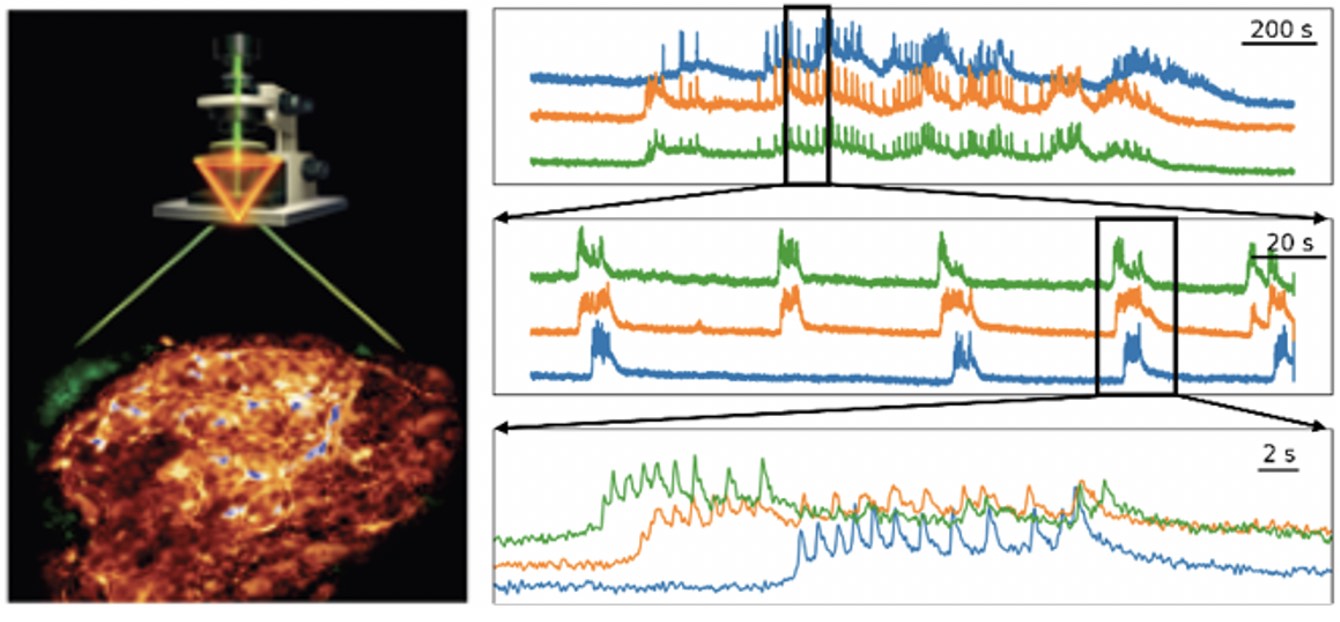
HGTD-IJS meeting
These are HGTD-IJS group meeting pages
https://cern.zoom.us/j/96207798641?pwd=STczWTN5YjFYTmlITFB3bEdPTE1MUT09
ELME Workshop on Areal Radiation Monitoring
Hands-on training for ELME team members on operating drone-mounted radiation detectors, conducted by Nuvia trainers
Delavnica: Osnove superračunalništva
Opis: Na delavnici se bomo seznanili z zgradbo računskih gruč in programsko opremo na njih ter zagnali svoje prve naloge. Naučili se boste razlikovati med prijavnimi vozlišči, računskimi vozlišči, ter sistemi za shranjevanje podatkov. Spoznali boste vlogo operacijskega sistema, vmesne programske opreme Slurm in uporabniških programov. Povezali se boste na prijavna vozlišča, prenašali datoteke na in iz superračunalnika, zaganjali naloge, s katerimi bomo obdelovali video posnetke, in spremljali izvajanje nalog.
Zahtevnost: Osnovna
Jezik: Slovenski
Termin: 27. 01. 2026 od 10.00 - 15.00
Omejitev števila udeležencev: 30
Virtualna lokacija: ZOOM
Ciljna publika: raziskovalci, inženirji, študenti, vsi ki potrebujejo več računskih virov pri svojem delu
Na izobraževanju pridobljena znanja:
- Razumevanje delovanja in zgradbe superračunalnikov
- Uporaba vmesne programske opreme SLURM
- Osnovna uporaba programskih okolij in vsebnikov
- Upravljanje z datotekami in poganjanje nalog
- Osnovna obdelava videoposnetkov
Organizator:
Predavatelji:
| Ime: | Davor Sluga |
| Opis: | https://fri.uni-lj.si/sl/o-fakulteti/osebje/davor-sluga |
| E-mail: | davor.sluga@fri.uni-lj.si |
| Ime: | Ratko Pilipović |
| Opis: | https://www.fri.uni-lj.si/sl/o-fakulteti/osebje/ratko-pilipovic |
| E-mail: | ratko.pilipovic@fri.uni-lj.si |
Delavnica: Hitro razvijanje aplikacij z uporabo velikih jezikovnih modelov
Kratek opis: Ta delavnica ponuja praktičen uvod v razvoj aplikacij z velikimi jezikovnimi modeli (LLM). Napredek v tehnikah in dostopnosti LLM-jev odpira neprimerljive priložnosti za podjetja, da poenostavijo svoje poslovanje, zmanjšajo stroške in povečajo produktivnost. Udeleženci bodo pridobili temeljito razumevanje in praktično znanje o razvoju aplikacij z LLM-ji z raziskovanjem odprtokodnega ekosistema, vključno s prednastavljenimi modeli, ki omogočajo hiter začetek razvoja. Ob koncu delavnice lahko udeleženci pridobijo uradni certifikat NVIDIA Deep Learning Institute.
Podrobnejši opis: Delavnica ponuja celovit uvod v razvoj aplikacij z velikimi jezikovnimi modeli. Spoznali boste, kako so strukturirani veliki jezikovni modeli in kako jih uporabljati. Pregledali bomo arhitekture transformerjev, vmesnike in intuicije ter kako se skalirajo za doseganje najsodobnejših rešitev LLM.
Raziskovali boste specializirane kodirne modele (encoder models) za naloge, kot so semantična analiza, vektorske predstavitve (embeddings), odgovarjanje na vprašanja in klasifikacija brez učenja (zero-shot classification). Prav tako se boste naučili uporabljati dekodirne modele (decoder models) za generiranje zaporedij, kot so programska koda, neomejeni odgovori in pogovori.
Ob koncu tečaja boste znali uporabljati tehnike upravljanja stanja in kompozicije za vodenje LLM-jev k varnim, učinkovitim in natančnim pogovorom, vključno z implementacijo RAG (Retrieval-Augmented Generation) za dostop do zunanjega okolja. Ob koncu delavnice lahko udeleženci pridobijo uradni certifikat Deep Learning Institute pri NVIDIA.
Zahtevnost: Osnovna
Jezik: Slovenski
Opis poteka izobraževanja: Delavnica poteka na daljavo preko brskalnika na oblačni infrastrukturi.
Priporočeno predznanje: Osnovno poznavanje globokega učenja in udobje pri uporabi PyTorch ter prenosnem učenju. Srednje poznavanje Pythona, vključno z objektno orientiranim programiranjem in uporabo knjižnic.
Ciljna publika: Študenti računalništva in informatike, inženirji, raziskovalci, razvijalci ter vsi, ki želijo razumeti in uporabljati velike jezikovne modele v praksi.
Na izobraževanju pridobljena znanja:
- Poiskati, uporabiti in eksperimentirati z repozitorijem modelov HuggingFace in pripadajočim API-jem
- Uporabljati kodirne modele za naloge, kot so semantična analiza, vektorske predstavitve, odgovarjanje na vprašanja in klasifikacija brez učenja
- Uporabljati dekodirne modele za generiranje zaporedij, kot so programska koda, neomejeni odgovori in pogovori
- Uporabljati tehnike upravljanja stanja in kompozicije za vodenje LLM-jev k varnim, učinkovitim in natančnim pogovorom
Omejitev števila udeležencev: 30
Virtualna lokacija: MS Teams
Organizator: UM FERI, NVIDIA
|
|


Predavatelja:
| Ime: | Domen Verber |
| Opis: | Domen Verber je docent na Fakulteti za elektrotehniko in računalništvo Univerze v Mari-boru (UM FERI) ter deluje kot strokovnjak na področju visokozmogljivega računalništva (HPC). Njegovo raziskovalno delo je osredotočeno na visokozmogljivo računalništvo in umetno inteligenco, s čimer se kontinuirano ukvarja že več kot 25 let. Med drugim opravlja funkcijo ambasadorja NVIDIA Deep Learning Institute na UM. |
| domen.verber@um.si, deep.learning@um.si |
| Ime: | Jani Dugonik |
| Opis: | Jani Dugonik je raziskovalec na Fakulteti za elektrotehniko, računalništvo in informatiko Univerze v Mariboru (UM FERI). Ukvarja se z raziskavami na področjih obdelave naravnega jezika, evolucijskih algoritmov in umetne inteligence. |
| jani.dugonik@um.si |


GPT-like transformer model for silicon tracking detector simulation
Simulating physics processes and detector responses is essential in high energy physics and represents significant computing costs. Generative machine learning has been demonstrated to be potentially powerful in accelerating simulations, outperforming traditional fast simulation methods. The efforts have focused primarily on calorimeters.
This seminar presents the very first studies on using neural networks for silicon tracking detectors simulation. The GPT-like transformer architecture is determined to be optimal for this task and applied in a fully generative way, ensuring full correlations between individual hits. Taking parallels from text generation, hits are represented as a flat sequence of feature values.
The tracking performance, evaluated on the Open Data Detector, is presented for single muons, electrons and pions. Benchmarking is performed on recent generations of GPUs to quantify the computing costs of such simulation setup.
HGTD-IJS meeting
These are HGTD-IJS group meeting pages
https://cern.zoom.us/j/96207798641?pwd=STczWTN5YjFYTmlITFB3bEdPTE1MUT09
HGTD-IJS meeting
These are HGTD-IJS group meeting pages
https://cern.zoom.us/j/96207798641?pwd=STczWTN5YjFYTmlITFB3bEdPTE1MUT09
HGTD-IJS meeting
These are HGTD-IJS group meeting pages
https://cern.zoom.us/j/96207798641?pwd=STczWTN5YjFYTmlITFB3bEdPTE1MUT09
RNA Salon #3
In the third meeting of the Ljubljana RNA Salon, we will have three short talks (15+5 minutes) given by members of participating groups, followed by informal discussion and exchange of ideas.
The RNA Salon will take place at the National Institute of Chemistry.
HGTD-IJS meeting
These are HGTD-IJS group meeting pages
https://cern.zoom.us/j/96207798641?pwd=STczWTN5YjFYTmlITFB3bEdPTE1MUT09
HGTD-IJS meeting
These are HGTD-IJS group meeting pages
https://cern.zoom.us/j/96207798641?pwd=STczWTN5YjFYTmlITFB3bEdPTE1MUT09
HGTD-IJS meeting
These are HGTD-IJS group meeting pages
https://cern.zoom.us/j/96207798641?pwd=STczWTN5YjFYTmlITFB3bEdPTE1MUT09
HGTD-IJS meeting
These are HGTD-IJS group meeting pages
https://cern.zoom.us/j/96207798641?pwd=STczWTN5YjFYTmlITFB3bEdPTE1MUT09
HGTD-IJS meeting
These are HGTD-IJS group meeting pages
https://cern.zoom.us/j/96207798641?pwd=STczWTN5YjFYTmlITFB3bEdPTE1MUT09
HGTD-IJS meeting
These are HGTD-IJS group meeting pages
https://cern.zoom.us/j/96207798641?pwd=STczWTN5YjFYTmlITFB3bEdPTE1MUT09
HGTD-IJS meeting
These are HGTD-IJS group meeting pages
https://cern.zoom.us/j/96207798641?pwd=STczWTN5YjFYTmlITFB3bEdPTE1MUT09
HGTD-IJS meeting
These are HGTD-IJS group meeting pages
https://cern.zoom.us/j/96207798641?pwd=STczWTN5YjFYTmlITFB3bEdPTE1MUT09
HGTD-IJS meeting
These are HGTD-IJS group meeting pages
https://cern.zoom.us/j/96207798641?pwd=STczWTN5YjFYTmlITFB3bEdPTE1MUT09
HGTD-IJS meeting
These are HGTD-IJS group meeting pages
https://cern.zoom.us/j/96207798641?pwd=STczWTN5YjFYTmlITFB3bEdPTE1MUT09
HGTD-IJS meeting
These are HGTD-IJS group meeting pages
https://cern.zoom.us/j/96207798641?pwd=STczWTN5YjFYTmlITFB3bEdPTE1MUT09
HGTD-IJS meeting
These are HGTD-IJS group meeting pages
https://cern.zoom.us/j/96207798641?pwd=STczWTN5YjFYTmlITFB3bEdPTE1MUT09
HGTD-IJS meeting
These are HGTD-IJS group meeting pages
https://cern.zoom.us/j/96207798641?pwd=STczWTN5YjFYTmlITFB3bEdPTE1MUT09
HGTD-IJS meeting
These are HGTD-IJS group meeting pages
https://cern.zoom.us/j/96207798641?pwd=STczWTN5YjFYTmlITFB3bEdPTE1MUT09
HGTD-IJS meeting
These are HGTD-IJS group meeting pages
https://cern.zoom.us/j/96207798641?pwd=STczWTN5YjFYTmlITFB3bEdPTE1MUT09
HGTD-IJS meeting
These are HGTD-IJS group meeting pages
https://cern.zoom.us/j/96207798641?pwd=STczWTN5YjFYTmlITFB3bEdPTE1MUT09
HGTD-IJS meeting
These are HGTD-IJS group meeting pages
https://cern.zoom.us/j/96207798641?pwd=STczWTN5YjFYTmlITFB3bEdPTE1MUT09
HGTD-IJS meeting
These are HGTD-IJS group meeting pages
https://cern.zoom.us/j/96207798641?pwd=STczWTN5YjFYTmlITFB3bEdPTE1MUT09
HGTD-IJS meeting
These are HGTD-IJS group meeting pages
https://cern.zoom.us/j/96207798641?pwd=STczWTN5YjFYTmlITFB3bEdPTE1MUT09
HGTD-IJS meeting
These are HGTD-IJS group meeting pages
https://cern.zoom.us/j/96207798641?pwd=STczWTN5YjFYTmlITFB3bEdPTE1MUT09
HGTD-IJS meeting
These are HGTD-IJS group meeting pages
https://cern.zoom.us/j/96207798641?pwd=STczWTN5YjFYTmlITFB3bEdPTE1MUT09
HGTD-IJS meeting
These are HGTD-IJS group meeting pages
https://cern.zoom.us/j/96207798641?pwd=STczWTN5YjFYTmlITFB3bEdPTE1MUT09
HGTD-IJS meeting
These are HGTD-IJS group meeting pages
https://cern.zoom.us/j/96207798641?pwd=STczWTN5YjFYTmlITFB3bEdPTE1MUT09
HGTD-IJS meeting
These are HGTD-IJS group meeting pages
https://cern.zoom.us/j/96207798641?pwd=STczWTN5YjFYTmlITFB3bEdPTE1MUT09
HGTD-IJS meeting
These are HGTD-IJS group meeting pages
https://cern.zoom.us/j/96207798641?pwd=STczWTN5YjFYTmlITFB3bEdPTE1MUT09
HGTD-IJS meeting
These are HGTD-IJS group meeting pages
https://cern.zoom.us/j/96207798641?pwd=STczWTN5YjFYTmlITFB3bEdPTE1MUT09
HGTD-IJS meeting
These are HGTD-IJS group meeting pages
https://cern.zoom.us/j/96207798641?pwd=STczWTN5YjFYTmlITFB3bEdPTE1MUT09
HGTD-IJS meeting
These are HGTD-IJS group meeting pages
https://cern.zoom.us/j/96207798641?pwd=STczWTN5YjFYTmlITFB3bEdPTE1MUT09
HGTD-IJS meeting
These are HGTD-IJS group meeting pages
https://cern.zoom.us/j/96207798641?pwd=STczWTN5YjFYTmlITFB3bEdPTE1MUT09
HGTD-IJS meeting
These are HGTD-IJS group meeting pages
https://cern.zoom.us/j/96207798641?pwd=STczWTN5YjFYTmlITFB3bEdPTE1MUT09
HGTD-IJS meeting
These are HGTD-IJS group meeting pages
https://cern.zoom.us/j/96207798641?pwd=STczWTN5YjFYTmlITFB3bEdPTE1MUT09
HGTD-IJS meeting
These are HGTD-IJS group meeting pages
https://cern.zoom.us/j/96207798641?pwd=STczWTN5YjFYTmlITFB3bEdPTE1MUT09
